Overcoming Procrastination with Intention

Overcoming procrastination starts with understanding it — that subtle resistance before starting something important isn’t laziness, it’s often fear or overwhelm in disguise. With intention and small steps, you can move from avoidance to aligned action.
Procrastination isn’t laziness. It’s a form of emotional avoidance — a quiet signal that something beneath the surface needs understanding, not punishment. When we learn to meet that resistance with awareness, we stop fighting time and start working with it.
In the iAmEvolving™ philosophy, procrastination isn’t a flaw to fix but a teacher to listen to. It’s often a sign of fear, perfectionism, or disconnection from purpose — and through journaling and reflection, we can realign with the energy of action and clarity.
What Procrastination Really Means
Most of us label procrastination as laziness, but that’s rarely true. Psychologists define it as a form of self-regulation failure — we delay tasks to avoid negative emotions like anxiety, fear of failure, or uncertainty. But underneath that delay is a deeper message: something in you needs reassurance or clarity before it can move forward.
Procrastination, then, is not about time management — it’s about emotion management. When you feel disconnected from why something matters, the mind resists the task. The more emotional weight it carries, the heavier it feels to begin.
Recognizing this changes everything. You stop forcing productivity and start cultivating emotional awareness. You shift from pressure to presence — from “I have to do this” to “I want to understand why I’m avoiding this.”
The Emotional Layers of Avoidance
Every time you put off a task, ask yourself: what am I really avoiding? Sometimes it’s not the task itself, but what the task represents.
- Fear of failure: “What if I’m not good enough?”
- Fear of success: “What if I can’t maintain this?”
- Perfectionism: “If it’s not perfect, it’s not worth starting.”
- Overwhelm: “It’s too much. I don’t know where to begin.”
- Lack of clarity: “I’m not sure why I’m doing this.”
Each of these fears drains your mental energy. But once you name the emotion, it loses its power. Journaling helps you see these patterns clearly — and when you can see them, you can change them.
In How Journaling Rewires Your Brain, we explore how reflection helps quiet self-doubt and regulate emotional overwhelm. Procrastination often disappears not because you force action, but because you finally feel safe enough to act.
Why You Can’t Think Your Way Out of Procrastination
When you’re caught in avoidance, logic alone doesn’t help. You already know what you need to do — you’ve analyzed it from every angle. Yet the gap between intention and action remains.
That’s because procrastination is emotional, not intellectual. It lives in the body — in the tightness in your chest, the restlessness in your hands, the heaviness in your mind. You can’t outthink emotion; you have to move through it.
Mindful awareness and journaling give you that doorway. They allow you to sit with discomfort long enough to understand what it’s trying to say. When you write instead of resist, the tension begins to release, and clarity replaces confusion.
Get more like this, every week
Three Journaling Prompts to Break the Cycle
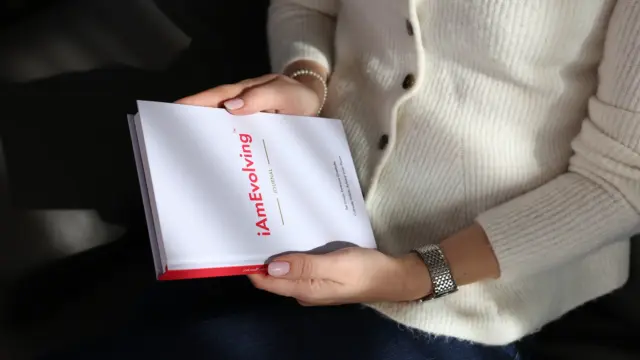
Before trying to “fix” procrastination, pause and reflect. Grab your iAmEvolving™ Journal or any notebook and write from honesty, not discipline. These prompts can help you reconnect with motivation:
- “What am I afraid might happen if I start?”
- “What would progress — not perfection — look like today?”
- “What small action feels easy and possible right now?”
The key is gentleness. When you replace judgment with curiosity, the resistance softens. You start moving not out of guilt, but out of alignment.
Turning Overwhelm into Momentum
Overwhelm is one of the main roots of procrastination. The brain freezes when a goal feels too big or undefined. The solution isn’t more willpower — it’s breaking the mountain into pebbles.
Here’s a mindful way to rebuild momentum:
- Start with clarity: Write down the one outcome that truly matters today. Just one.
- Simplify the first step: Make it so small it’s impossible to fail — open the document, sketch the outline, write the first sentence.
- Celebrate completion: Each small step deserves acknowledgment. Progress is proof you’re showing up for yourself.
As you take these micro-actions, your energy begins to shift. The brain rewards completion with dopamine, turning motion into motivation. Over time, this rewires the cycle — from avoidance to activation.
The Power of Present Action
Procrastination thrives in the future — “I’ll start tomorrow.” Action, however, only happens now. The simplest way to overcome resistance is to return to the present moment.
When you catch yourself thinking “I’ll do it later,” ask instead: “What’s one thing I can do right now?” It doesn’t have to be big or perfect. Just real.
This is mindfulness in motion. You’re not forcing yourself — you’re choosing to begin, one breath at a time. Even five minutes of presence can shift your entire state.
If you’re struggling to ground your focus, you might find support in Finding Stillness in a Busy World. Stillness isn’t inactivity — it’s clarity before motion. From that clarity, procrastination loses its grip.
How Gratitude Helps You Move Forward
Gratitude may seem unrelated to procrastination, but it’s a powerful antidote. When you focus on what you’re thankful for — your opportunities, your growth, your ability to choose — you shift from scarcity to abundance. Action flows more easily when you feel supported rather than pressured.
Each time you feel stuck, pause and write down three things you’re grateful for — especially things related to your current challenge. Gratitude grounds you in presence and replaces fear with possibility.
As explored in The Benefits of Daily Gratitude Journaling, small daily appreciation practices can transform mindset patterns and make action feel lighter, not forced.
Practical Strategies to Rebuild Consistency
To evolve beyond procrastination, you need consistent practices that honor both your emotions and your energy. Try integrating these mindful tools into your daily rhythm:
- Set mindful intentions: Begin your day with one clear sentence — “Today, I will focus on progress, not perfection.”
- Use a timer with compassion: Try the “gentle Pomodoro” — 25 minutes of focused effort followed by 5 minutes of reflection, not distraction.
- End your day with review: Write one thing you’re proud of completing. Recognition builds momentum.
- Pair habits with emotion: Attach your action to meaning — remind yourself why this task aligns with who you’re becoming.
The iAmEvolving™ approach emphasizes harmony, not hustle. You’re not fixing procrastination — you’re cultivating presence, clarity, and self-trust.
Procrastination as a Mirror for Growth
When you start to see procrastination not as a flaw but as feedback, it becomes a tool for self-awareness. It shows you where you feel uncertain, disconnected, or misaligned. Every moment of avoidance carries a message — an invitation to look inward.
As you reflect, you’ll notice patterns: when you procrastinate, how your body feels, and what beliefs surface. With each layer of awareness, you regain choice — and choice is power.
True productivity is not about constant motion. It’s about conscious direction. It’s about choosing what matters and honoring it with presence, not pressure.
Journaling Prompts to Reconnect with Purpose
- “What am I avoiding feeling right now?”
- “What would taking imperfect action look like?”
- “What small win can I create today to build trust with myself?”
- “Where can I replace pressure with presence?”
- “What does progress mean to me — not others?”
These reflections shift your inner dialogue from blame to awareness. And awareness naturally leads to movement — not because you “should,” but because you’re ready.
From Avoidance to Alignment
Procrastination is not your enemy. It’s an invitation to slow down, listen, and realign. When you meet it with curiosity, it transforms from resistance into wisdom. You begin to understand what you need — rest, clarity, encouragement — and from that place, action flows naturally.
Every small step you take is evidence that you’re evolving. Each act of presence dissolves the old pattern of delay. You’re not trying to force discipline; you’re building trust — one decision, one page, one breath at a time.
Overcoming procrastination isn’t about pushing harder — it’s about learning to move with awareness and compassion. When you act from calm alignment instead of pressure, momentum feels natural again. Each small, intentional step strengthens your self-trust and keeps you connected to your purpose. Continue exploring mindful routines and growth habits that support consistent progress in Daily Growth & Practices.
Start your daily practice of gratitude, goals, and growth.
Get the Journal →A gentle 7-day reset to help you slow down, feel steadier, and reconnect — in just 5–10 minutes a day.
Start the ResetA simple introduction to daily journaling — gratitude, goals, and habits made easy.
Learn the MethodIf you’re ready to rebuild focus and self-trust, the iAmEvolving™ Journal is designed to help you reconnect with your purpose and create gentle daily momentum. Because progress doesn’t come from pushing harder — it comes from aligning deeper.
FAQ – How to Overcome Procrastination
What causes procrastination?
How can journaling help me stop procrastinating?
How do I find motivation when I feel stuck?
Can mindfulness really help with procrastination?