How to Start Journaling for Beginners: A No-Pressure Guide
You do not need a special notebook, a perfect morning routine, or years of writing experience to start journaling. You need a pen, a page, and the willingness to be honest with yourself for a few minutes each day. If you have been wondering how to start journaling for beginners, the truth is simpler than most advice makes it sound. There is no wrong way to do this. There is no minimum word count, no required format, and no one grading your work. Journaling is a private conversation between you and the page, and the only rule that matters is showing up.
The reason so many people want to journal but never start, or start and stop within a week, is that they overcomplicate it. They imagine pages of beautiful prose. They worry about what to write. They feel pressure to produce something meaningful every single time. That pressure kills the practice before it begins. The truth is that the most powerful journaling sessions are often the messiest, the most scattered, the most honest. If you are ready to begin without the pressure, this guide walks you through everything you need to know and nothing you do not.
How to Start Journaling for Beginners: What You Need
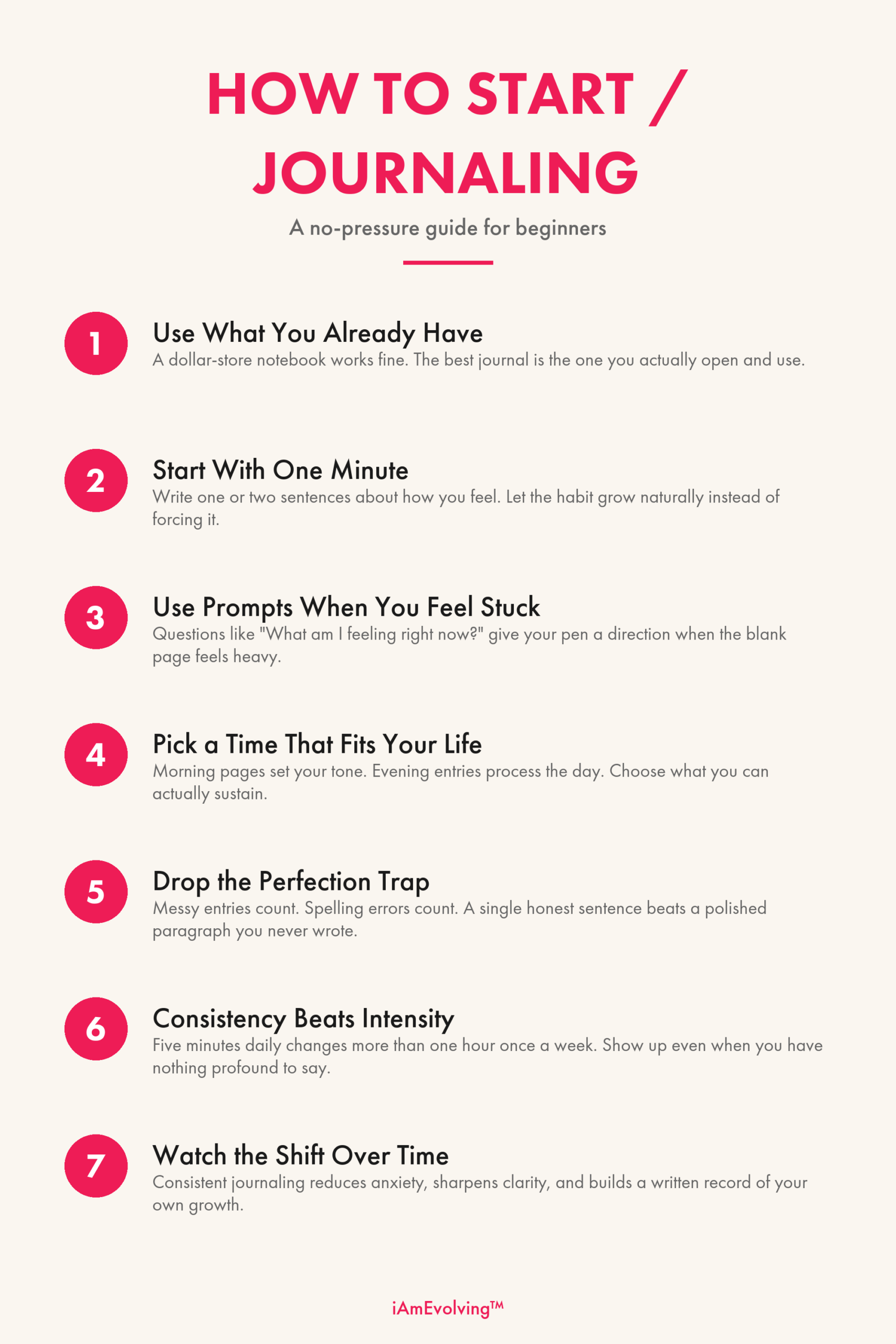
You need two things: something to write with and something to write on. That is genuinely it. A spiral notebook from a dollar store works. A notes app on your phone works. A dedicated journal with guided sections works. The tool matters far less than the habit.
That said, many people find that a physical journal feels different from typing on a screen. Writing by hand is slower, which forces your brain to process thoughts more deliberately. Handwriting engages more neural pathways than typing, which means the experience is encoded more deeply in your memory. If you have the choice, a physical journal is worth trying.
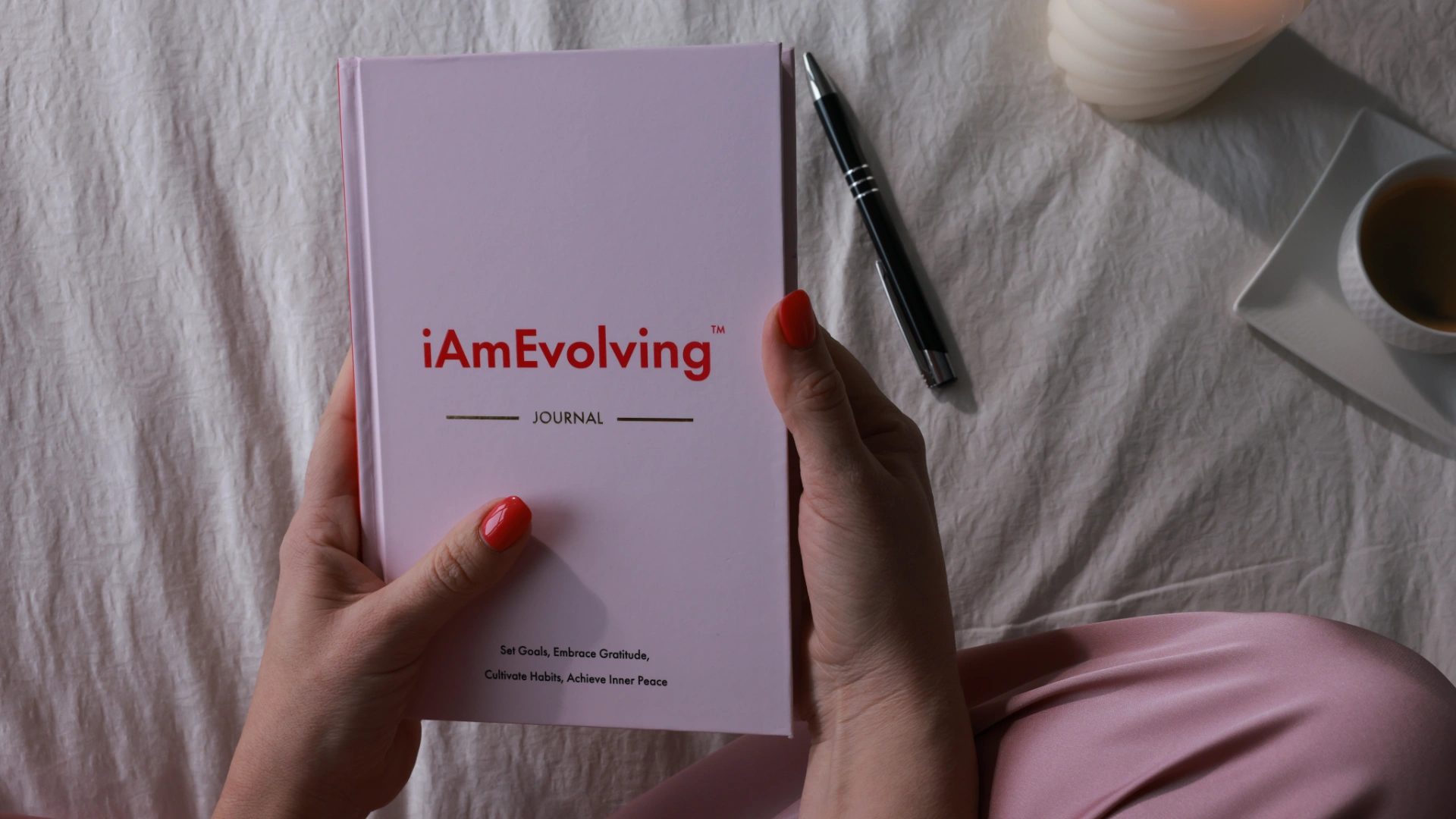
Do not let the search for the perfect journal delay your start. Use what you have today. If you eventually want a more structured experience, the iAmEvolving Journal provides guided daily pages that combine gratitude, goals, habits, and reflection in one place. But any blank page is a good starting point. The best journal is the one you actually use.
Start With One Minute, Not One Hour
The biggest mistake beginners make is trying to write too much too soon. They sit down on day one and try to fill three pages. It takes forty-five minutes. It feels exhausting. By day three, they dread opening the journal. By day five, they quit.
Start with one minute. Seriously. Open your journal, write one or two sentences about how you feel right now, and close it. That is a successful journaling session. Tomorrow, write two or three sentences. The next day, maybe a short paragraph. Let the practice grow naturally rather than forcing it.
The goal for the first week is not insight or transformation. The goal is the habit. You are teaching your brain that journaling is a regular part of your day, something that happens automatically like brushing your teeth. Once the habit is established, the depth follows on its own. You will find yourself writing more because you want to, not because you have to.
Here is a simple progression for your first month:
- Week 1: Write one to three sentences each day. Focus on what you feel right now.
- Week 2: Write a short paragraph. Start with how you feel, then add one thing you are grateful for.
- Week 3: Write for five minutes. Use a prompt if you are stuck, or write freely about your day.
- Week 4: Experiment with structure. Try writing about a specific goal, reflecting on a challenge, or answering a deeper question.
By the end of the first month, you will have a journaling habit that fits your life. You will also have four weeks of written reflections to look back on, which is itself a powerful experience.
What to Write About When You Do Not Know What to Write
The blank page can feel intimidating when you are just starting. You sit down, pen in hand, and your mind goes blank. This is completely normal. Here are three easy starting points that work every time:
Start with “Right now I feel…”
This one sentence unlocks everything. You do not need a topic or a theme. You just need to name your current emotional state. “Right now I feel tired.” “Right now I feel anxious about tomorrow.” “Right now I feel strangely calm and I don’t know why.” Once you name the feeling, your pen usually keeps moving on its own. The feeling leads to the reason, the reason leads to a thought, and the thought leads to an insight you did not expect.
Answer a simple question.
Questions direct your thinking and eliminate the what-should-I-write paralysis. Here are ten beginner-friendly questions:
- What is one thing I want to remember about today?
- What am I looking forward to this week?
- What drained my energy today, and what restored it?
- What is one thing I did well recently that I have not acknowledged?
- If I could change one thing about my current routine, what would it be?
- What am I avoiding, and why?
- What would make tomorrow feel like a good day?
- What is one small thing I am grateful for right now?
- How do I want to feel by the end of this week?
- What is something I have been overthinking that I can release?
Describe your day in three sentences.
If prompts feel like too much, simply describe your day in three sentences. “I woke up tired. Work was stressful but I finished the project. Tonight I watched something funny and it helped.” That is a journal entry. It is brief, honest, and captures the emotional shape of your day. Over time, these short entries create a meaningful record of your life.
Get more like this, every week
Choosing When to Journal
The best time to journal is the time you will actually do it. Some people swear by morning journaling because it sets their mindset for the day. Others prefer evening journaling because it helps them process and release the day’s events. Both work. Neither is better.
Morning journaling tends to be more forward-looking. You write about intentions, goals, and how you want to show up. It creates a sense of direction before the day begins. Evening journaling tends to be more reflective. You write about what happened, what you felt, and what you want to carry forward or leave behind. It creates closure and peace before sleep.
If you cannot decide, start with evening journaling. The day gives you material to work with. You do not have to generate topics from nothing. You simply reflect on what already happened. Once the habit is established, you can experiment with adding a morning session if it feels right.
The key is attaching journaling to an existing habit. Write after your morning coffee. Write before turning off the light at night. Write during your lunch break. When journaling is linked to something you already do, it requires less willpower to maintain.
Common Beginner Mistakes and How to Avoid Them
Understanding these common pitfalls will help you build a practice that lasts:
- Trying to make every entry profound. Some days you will write something insightful. Other days you will write that you are tired and ate cereal for dinner. Both are valid. The practice is the point, not the content.
- Comparing your journal to others. Social media shows beautiful, curated journal spreads. Real journaling is messy, cross-outs and all. Your journal is for you, not for an audience.
- Skipping a day and quitting. Missing a day is not failure. It is normal. The practice is not a streak to maintain. It is a tool to return to whenever you need it. If you miss Monday, write on Tuesday. No guilt required.
- Writing for too long at the start. Long sessions early on lead to burnout. Keep it short for the first few weeks. You can always write more later once the habit feels natural.
- Worrying about grammar or handwriting. Nobody is reading this. Abbreviate. Misspell. Scribble. The journal exists to serve you, not to impress anyone.
What Happens When You Journal Consistently
Something shifts when you journal consistently for more than a few weeks. You start noticing patterns in your thinking. You see which worries repeat, which situations drain you, and which moments light you up. This self-knowledge does not come from reading about yourself. It comes from writing yourself into clarity, day after day.
Research shows that consistent journaling reduces stress, improves emotional regulation, strengthens memory, and supports better decision-making. Once you are comfortable with the basics, you can begin using journaling for self-improvement by adding intention, structure, and reflection to your practice. These benefits are not theoretical. They appear in peer-reviewed studies and are confirmed by the lived experience of millions of people who journal daily. The complete journaling guide covers every dimension of what journaling can do for you as your practice grows.
You will also create something valuable. A year from now, you will have a written record of your inner life, your growth, your challenges, and your evolution. You will be able to look back and see how much you have changed. That record becomes one of the most meaningful things you own, not because of what is in it, but because of who you became while writing it.
Your First Entry Starts Now
You have everything you need to begin. Do not wait for the right journal, the right mood, or the right time. Grab any piece of paper. Write one sentence about how you feel right now. Congratulations. You just started journaling.
If you want a guided structure that grows with you, the iAmEvolving Journal gives you daily prompts for gratitude, goals, habits, and reflection in one place. It was designed for people who want the benefits of journaling without the guesswork of building a practice from scratch. But whatever tool you choose, the important thing is to begin. The page is ready. You are ready. Start with one sentence and see where it takes you.
Start your daily practice of gratitude, goals, and growth.
Get the Journal →A gentle 7-day reset to help you slow down, feel steadier, and reconnect — in just 5–10 minutes a day.
Start the ResetA simple introduction to daily journaling — gratitude, goals, and habits made easy.
Learn the MethodFAQ: How to Start Journaling for Beginners
What should a beginner write in a journal?
How often should beginners journal?
Do I need a special journal to start?
Is it better to journal in the morning or at night?