10 Journaling Habits That Will Transform Your Life
Journaling is one of the simplest tools for personal growth — but the real power doesn’t come from writing occasionally. It comes from building strong journaling habits that make reflection, clarity, and growth part of your daily rhythm.
Habits turn good intentions into automatic actions. When journaling becomes part of your routine, it stops being a task and becomes a powerful anchor for mindset, productivity, and self-awareness.
As a personal development coach, I’ve seen how these 10 habits can completely transform the way people think, grow, and live.
If you want a complete guide that helps you build a journaling practice rooted in habits that support long-term clarity, growth, and emotional well-being, explore my full guide on The Ultimate Journaling Guide. It will show you how to turn simple habits into a powerful daily ritual that transforms your life from the inside out.
Why Journaling Habits Change Everything
Most people try journaling once or twice, feel good about it, and then quietly stop. It is not because journaling does not work — it is because they never built the habit around it. Without a routine, even the most powerful tool gathers dust.
When you cultivate a daily mindfulness journaling habit, something shifts. Writing becomes a way to slow down, check in with yourself, and process the things that would otherwise stay tangled in your mind. You start noticing patterns in your thinking, catching emotional reactions before they spiral, and making decisions from a calmer place.
The habits in this guide are not complicated. They are small, practical steps that remove friction and build momentum — so journaling stops being something you have to remember and starts being something you look forward to. If you want to go deeper into the process of making journaling stick, read my guide on how to build a journaling habit that lasts.
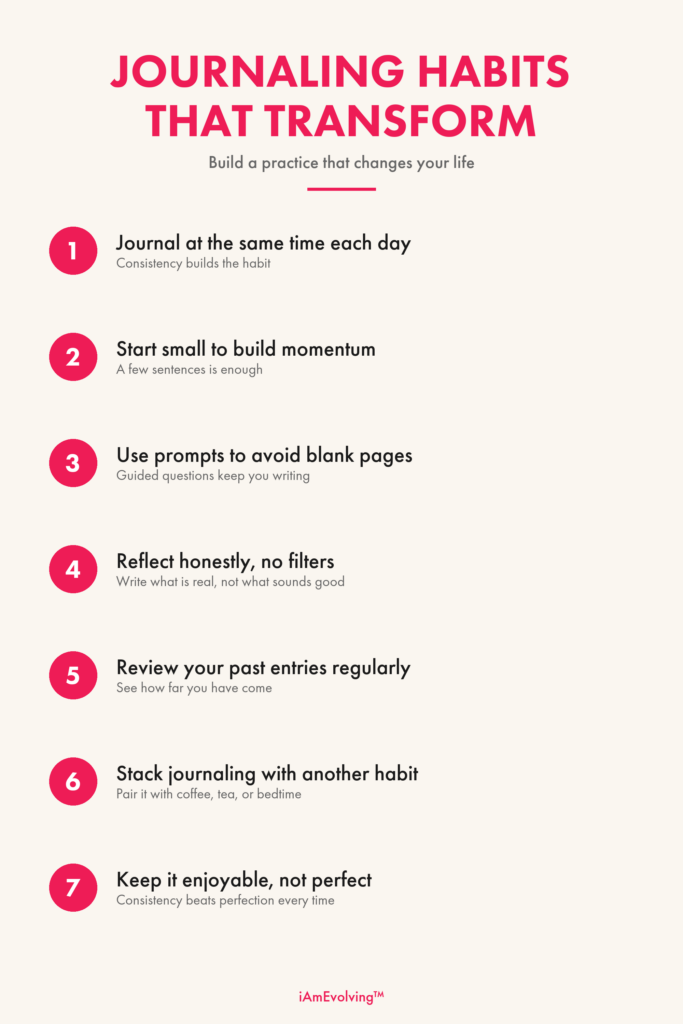
1. Journal at the Same Time Each Day
Consistency starts with timing. Choose a moment in your day that you can stick to — mornings for intention, evenings for reflection, or both. A fixed time helps your brain associate journaling with your daily flow.
Morning journaling is especially powerful for setting the tone of your day — it gives you clarity before the noise begins. Evening journaling, on the other hand, helps you process what happened and release tension before sleep. You do not have to choose one or the other. Many people find that a short morning journaling routine paired with an evening journaling routine creates the strongest daily rhythm.
2. Keep Your Journal Visible
Out of sight = out of mind. Keep your journal somewhere you’ll see it daily — like your desk, nightstand, or beside your coffee machine. This simple habit removes friction and serves as a daily reminder to write.
Get more like this, every week
3. Start Small to Build Momentum
You don’t need to write pages every day. Start with a few sentences or a short list. Most journaling habits fail because people try to do too much at once. Start small, stay consistent, and let the habit grow naturally.
Five minutes is enough to build a strong daily journaling habit. Write one thing you are grateful for, one intention for the day, or one honest reflection about how you feel. The point is not volume — it is consistency. Once the habit is in place, longer sessions happen on their own because you genuinely want to write more.
4. Use Prompts to Avoid Blank Page Syndrome
Prompts keep journaling easy and focused. Even experienced journalers sometimes don’t know what to write. Having a few go-to questions like:
- “What am I grateful for today?”
- “What’s my intention for tomorrow?”keeps the momentum going.
Check out 30 Daily Journaling Ideas for inspiration.
5. Reflect Honestly — No Filters
The most powerful journaling comes from honesty. Don’t write what you think you should say — write what’s real. Over time, this habit builds emotional clarity, self-awareness, and deep personal growth.
This is where journaling becomes more than a habit — it becomes a mindfulness practice. When you write without editing yourself, you are training your brain to observe your thoughts rather than react to them. You start seeing what is actually driving your emotions instead of staying stuck on the surface. That kind of self-awareness is what turns a daily writing routine into genuine transformation.
6. Review Your Past Entries Regularly
Every few weeks, take time to read through older pages. This habit reveals patterns, shows progress, and helps you stay connected to your goals. Looking back is motivating — it reminds you of how far you’ve come.
7. Use a Structured Journal to Stay Consistent
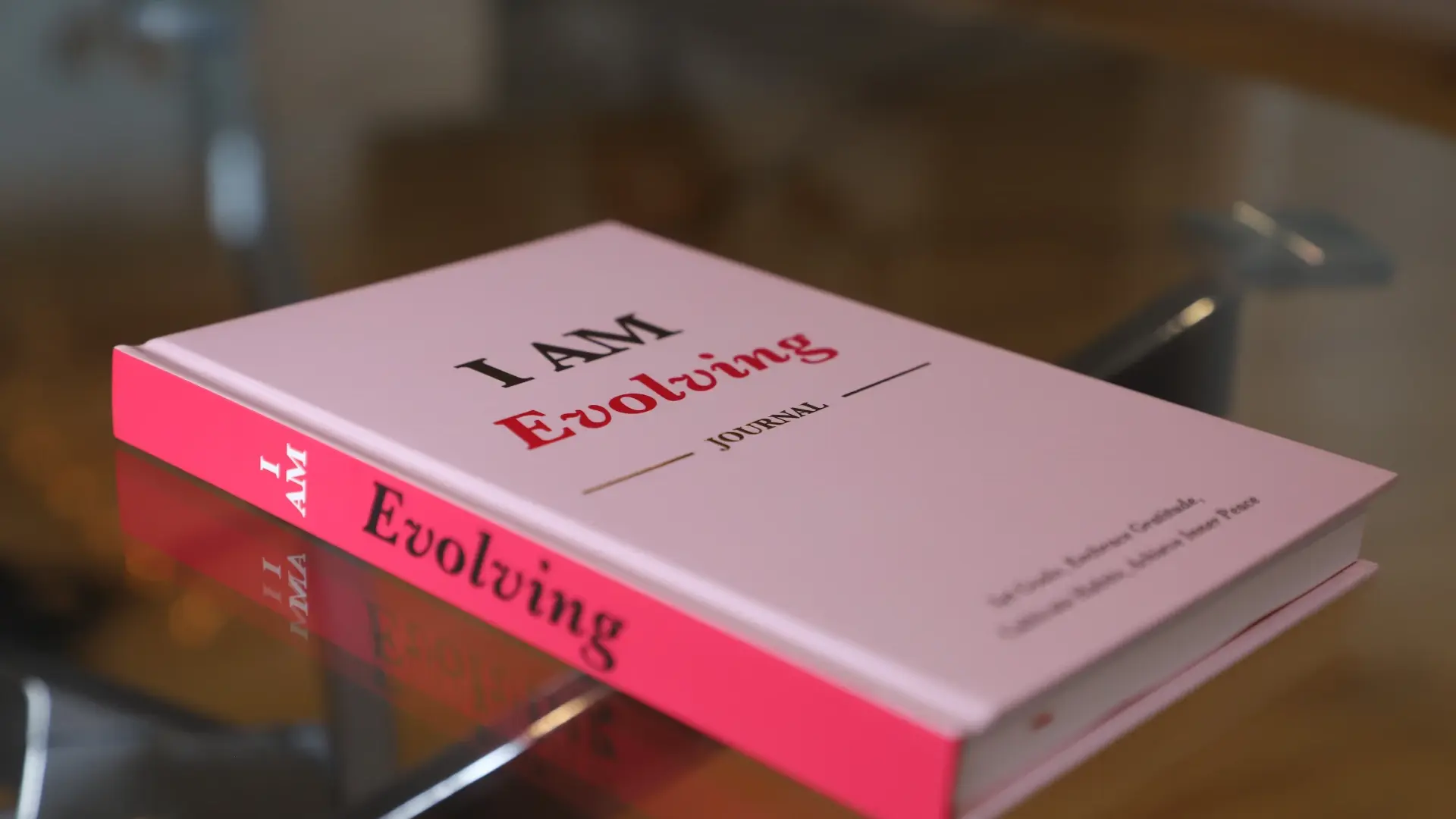
While any notebook can work, structured journals make it much easier to build journaling habits. The iAmEvolving Journal is designed specifically to help you develop a meaningful daily practice with clear sections for:
- Goal setting
- Gratitude
- Habit tracking
- Reflection
Available here:
Start your daily practice of gratitude, goals, and growth.
Get the Journal →A gentle 7-day reset to help you slow down, feel steadier, and reconnect — in just 5–10 minutes a day.
Start the ResetA simple introduction to daily journaling — gratitude, goals, and habits made easy.
Learn the Method8. Pair Journaling With Another Habit (Habit Stacking)
One of the easiest ways to make journaling stick is to attach it to a habit you already have — like morning coffee, evening tea, or nightly reading. This “habit stacking” technique removes decision fatigue and makes journaling automatic.
For example, if you already have a bedtime routine, add five minutes of journaling right before you turn the lights off. Journaling before sleep helps you process the day and quiet your mind so you fall asleep with less mental clutter. If mornings are your thing, pair journaling with your first cup of coffee. The more natural it feels alongside something you already do, the less willpower it requires — and that is the secret to habits that last.
9. Keep It Enjoyable
If journaling feels like a chore, you’ll eventually stop. Make it something you look forward to: use a pen you love, light a candle, or play gentle music. The more enjoyable the ritual, the easier it is to keep up.
10. Set Realistic Expectations
You don’t need perfect entries or profound insights every day. Some days will be short, messy, or uninspired — and that’s okay. The goal is to keep the habit alive, not to write a masterpiece. Consistency > perfection.

How to Cultivate a Daily Mindfulness Journaling Habit
If you have ever tried to journal daily and struggled to stay consistent, adding a mindfulness element might be the missing piece. A mindfulness journaling habit is not about writing more — it is about writing with intention and presence.
Here is a simple way to start. Before you open your journal, take three slow breaths. Close your eyes for a moment and notice how you feel — physically, emotionally, mentally. Then open the page and write from that place of awareness. You are not trying to be productive or insightful. You are simply noticing what is true for you right now.
This approach works because it lowers the pressure. You do not need a clever prompt or a big idea. You just need to be present with yourself for a few minutes. Over time, this daily mindfulness journaling practice builds a kind of emotional muscle — you become more aware of your patterns, more grounded in stressful moments, and more connected to what actually matters to you.
Combine this with any of the journaling habits above, and you have a practice that is both simple and deeply transformative. Start with five minutes of mindful writing each day, and let the habit build from there. For a broader look at how to make journaling part of your personal growth journey, explore how to start journaling for self-improvement.
Final Thoughts
Building strong journaling habits is one of the most impactful ways to bring clarity, focus, and intentional growth into your life. You don’t need hours or elaborate routines — just simple daily actions done consistently.
Start with one habit from this list, make it part of your rhythm, and watch how your mindset and life begin to shift — one page at a time.
Journaling habits shape the rhythm of your growth — small, consistent actions that lead to deep self-awareness over time. Each page strengthens your focus and intention. To explore more ways to create mindful writing routines that last, visit Journaling Routines & Daily Practice.
FAQ
How long does it take to build a journaling habit?
What’s the best way to stay consistent with journaling?
Do I have to journal at the same time every day?
How can I avoid losing motivation after the first week?
Should I use a structured journal to build better habits?
What if I miss a day — will it break the habit?