Vision Board 2027: How to Make One That Actually Works (+ 50 Ideas)
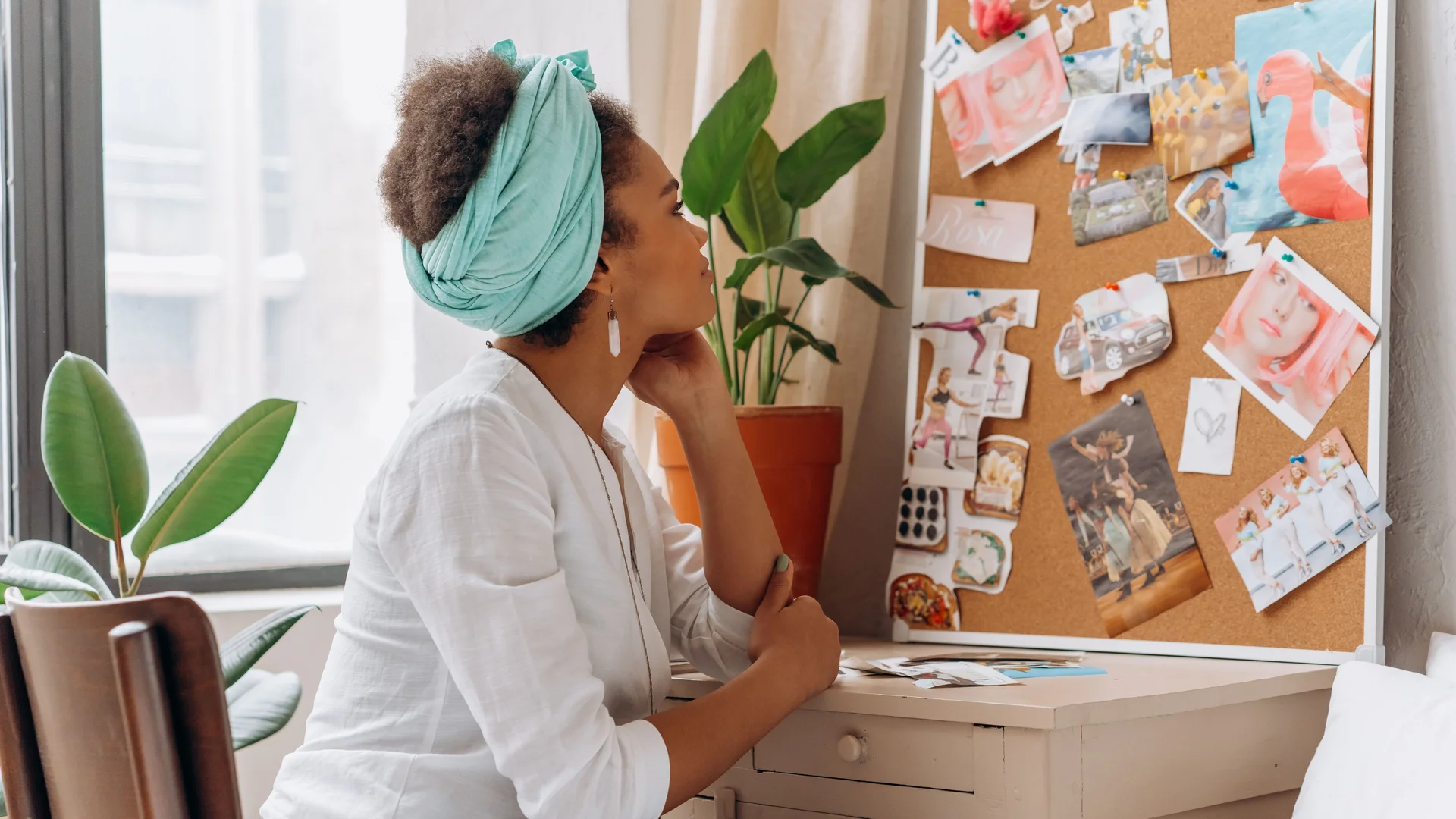
A vision board is a collage of images and words that shows what you want your life to look like by the end of the year. A vision board 2027 works when it is paired with a daily action: the board shows you where you are going, and small written steps each morning move you toward it. On its own, it is a nice picture on the wall that most people stop seeing by February.
Below you will find a six-step method for making a vision board in one afternoon, 50 ideas for what to put on it, a quick guide to choosing between a physical, digital, or journal board, and the daily habit that turns the pictures into progress. If you have already chosen your word of the year, keep it close. It belongs at the center of your board.
What a Vision Board Does (and Why Most Stop Working by February)
A vision board turns vague wishes into something you can see. Instead of “I want a better year,” you have a photo of the cabin you want to rent in July, the trail you want to run, or the desk where your business will start. Seeing it every day keeps the goal in your attention, and attention is where every result starts.
Here is the catch. Psychologist Gabriele Oettingen has spent decades studying what happens when people picture an ideal future. In one study with Doris Mayer, graduates who held the most positive fantasies about landing a great job sent out fewer applications and received fewer job offers two years later. A 2011 follow-up with Heather Barry Kappes found that positive fantasies about an ideal future left people with less energy to act. Picturing the dream can feel so good that the brain treats it as half done.
That does not mean vision boards are useless. It means a board needs a second half: a plan for the work. Here is the difference between the two kinds of boards.
| A board that fades | A board that works | |
|---|---|---|
| Starts with | Pretty images | Written goals |
| Shows | Only the result | The result and the daily effort |
| Number of goals | As many as fit | 3 to 5 life areas |
| Daily use | Glanced at, then ignored | Linked to one action each morning |
| Review | Next December | Every month |
How to Make a Vision Board 2027 in 6 Steps
Give yourself one quiet afternoon. You will need a notebook, a pen, and either a corkboard and magazines or a free design app. Do the steps in order. The first three happen on paper before you touch a single image.
1. Look back at 2026 first
Your best plans for next year come from what this year taught you. Write short answers to three questions: What am I proud of? What do I never want to repeat? What did I keep putting off? If you want a deeper review, work through these year-end reflection journal prompts before you start.
2. Choose three to five life areas
A board that tries to cover everything ends up saying nothing. Pick the areas that matter most this year, such as career, money, health, relationships, home, or personal growth. Three to five is enough. Each area gets its own section of the board.
3. Write one clear goal for each area
This is the step most people skip, and it is the reason their boards drift into decoration. Before you look for images, write one sentence per area that says what will be true by December 31, 2027. “Run a half marathon in October.” “Save $6,000 for an emergency fund.” “Launch my pottery shop online.” Specific goals give the images a job. There is a reason writing down your intentions comes before any visual: the words decide what the pictures are for.
4. Find images of the effort, not only the result
For each goal, choose two images: one of the result and one of the work that gets you there. A finish line and a pair of muddy running shoes at 6 a.m. A full savings account and a packed lunch on a weekday. This matters. In a 1999 study by Lien Pham and Shelley Taylor, students who pictured themselves studying each day studied more and earned higher exam grades than students who only pictured getting a good grade. Picturing the process helped them act on it.
5. Add your word and a few short phrases
Put your word of the year in the center. Around it, add three to five short phrases written in the present tense, as if they are already true: “I train three mornings a week.” “I finish what I start.” Keep them short enough to read in one glance. Leave some empty space. A crowded board is hard to read and easy to ignore.
6. Put it where you will see it every morning
Hang it next to your bed, above your desk, or on the inside of a door you open daily. A board in the closet does nothing. Then, for each section, write one small action you can take this week. That list is what turns the board from a wish into a plan.
50 Vision Board Ideas for 2027
Not sure what to put on your board? Use these as starting points. Pick the ones that match the goals you wrote in step three, and skip the rest.
Career and money
- The job title or role you are working toward, written out
- A photo of the workspace you want to build
- A savings target with a progress bar you color in each month
- The logo or name of the business you want to launch
- A “paid off” stamp next to the debt you plan to clear
- The cover of a book you want to finish writing
- A course or certificate you want to complete
- A calendar with focused work blocks marked in color
- Someone presenting confidently in front of a room
- A phrase like “I ask for what I am worth”
Health and energy
- Running shoes by the door at sunrise
- The race, hike, or event you want to finish
- A full water bottle and a simple home-cooked meal
- A dark, tidy bedroom that says “sleep by 10:30”
- A yoga mat rolled out in a quiet corner
- Someone lifting weights with good form
- A trail or park you want to walk every week
- A phone left charging in another room
- A bike you will ride to work in spring
- A phrase like “I move my body every day”
Relationships and family
- A long dinner table full of friends
- A weekly date night marked on the calendar
- A handwritten letter to someone you miss
- A parent and child reading together
- A photo of the people you want to visit this year
- Two people talking with phones face down
- A community class or group you want to join
- A volunteer shift you want to commit to
- A family tradition you want to start
- A phrase like “I show up for the people I love”
Home, travel, and lifestyle
- The city or country you want to visit
- A clean, uncluttered living room
- A garden or balcony full of plants
- The home you are saving for
- A packed weekend bag for a slow getaway
- A reading nook with a stack of books
- A morning coffee with no rush
- A new skill you want to learn, like pottery or guitar
- A kitchen where you cook more than you order
- A phrase like “I make room for what matters”
Personal growth and mindset
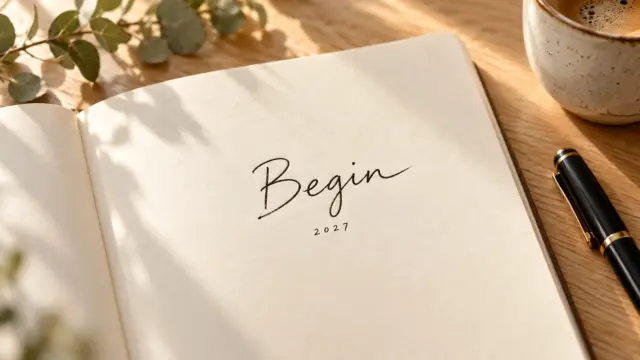
- An open journal on a desk in morning light
- Your word of the year in large letters
- A stack of books you plan to read
- A mountain summit for the hard goal you are afraid of
- A quiet meditation spot
- A photo of you as a child, to remember who you are doing this for
- A habit tracker with every box filled in
- Someone speaking up in a meeting
- A sunrise, for the mornings you will claim for yourself
- A phrase like “I am becoming the person who does the work”
Get more like this, every week
Physical, Digital, or Journal: Which Vision Board Is Best?
The best vision board is the one you will see every day. Most people do well with a physical board for the wall plus a small version in their journal, where the daily work happens.
| Physical board | Digital board | Journal page | |
|---|---|---|---|
| Made with | Corkboard, magazines, prints | Canva, Pinterest, phone wallpaper | A spread in your notebook |
| Seen | Every time you walk past it | Every time you unlock your phone | Every time you write |
| Easy to update | Medium | Very easy | Easy |
| Connects to action | Weak on its own | Weak on its own | Strong, it sits next to your daily goals |
| Best for | Visual people with a wall to use | People who live on their phone | Turning the vision into daily steps |
If you only make one, make it the one you will look at first thing in the morning. For many people, that is a phone lock screen. For others, it is the inside cover of a journal.
How to Use Your Vision Board Every Day
Making the board takes an afternoon. Using it takes two minutes a day, and those two minutes are where the results come from. People often talk about vision boards as a way to manifest what they want. The part that does the manifesting is what you do after you look at the board.
- Look at it with one question. Each morning, pick one image and ask: “What is one thing I can do today that moves me toward this?”
- Write that one thing down. A goal you write is harder to forget than a goal you only think about. Keep it small enough to finish today.
- Picture the process for 60 seconds. Close your eyes and see yourself doing the step: lacing your shoes, opening the laptop, making the call. This is the kind of goal visualization that leads to action.
- Name the obstacle. Write the one thing most likely to get in your way today and what you will do if it shows up. “If I feel too tired after work, I will walk for ten minutes instead of skipping.”
- Review once a month. On the first of each month, mark what moved, what stalled, and what no longer fits. Swap images when your goals change.
Step four comes from Oettingen’s later work. She found that people who pair a picture of the future with an honest look at what stands in the way follow through more than people who only dream. Her method is called mental contrasting, and it is the missing half of most vision boards.
When I designed the iAmEvolving Journal, I built the daily goal section around this idea. Each morning you write one goal, and you write it a second time to commit to it. Your vision board shows you the year. The daily goal page is where you decide what today will do for it. If you want a full system for breaking a year-sized dream into small steps, read how to turn big goals into daily actions.
Vision Board Journal Prompts
Use the first four prompts while you build your board. Come back to the last four once a month to keep it honest. If you like this kind of writing, a manifestation journal takes the same idea further with daily entries.
- If 2027 went well, what would I be doing on an ordinary Tuesday in December?
- Which goal on my board excites me, and which one only looks good?
- What would I have to give up to make room for my biggest goal?
- Who do I need to become to reach this? What does that person do each morning?
- Which image on my board did I move closer to this month?
- What got in the way, and what will I do differently next month?
- Is there an image I keep skipping past? Why?
- What would I add to the board now that I did not know in January?
Board image: the half marathon finish line. Today: ran 4 km before work. Obstacle tomorrow: early meeting. Plan: run at lunch instead.
That is a complete entry. One image, one action, one obstacle, one plan. It takes less than two minutes to write.
Make Your Vision Board in One Afternoon
Review the Past Year
Choose Three to Five Life Areas
Write One Goal per Area
Find Images of the Result and the Effort
Add Your Word and Phrases
Hang It and Plan This Week
From Picture to Progress
Your vision board 2027 is a promise you make to yourself in December. It gets kept in small moments: the early run, the saved twenty dollars, the hard email you finally send. Make the board with care, hang it where you will see it, and give it one small job every morning.
The iAmEvolving Journal is built for that morning job. You write your daily goal and repeat it, note what you are grateful for, track six habits, check in on your inner harmony, and every ten days you turn to a reflection page to see how far the year has moved.
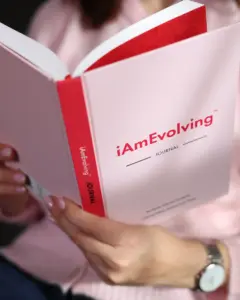
Start your daily practice of gratitude, goals, and growth.
Get the Journal →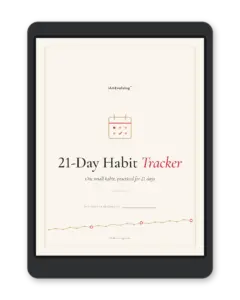
A free 21-day habit tracker PDF with daily check-ins, guided reflection prompts, and mindset reminders. Clean, minimal, and printable.
ExploreFrequently Asked Questions
What should I put on my vision board for 2027?
Do vision boards actually work?
When is the best time to make a vision board?
Is a digital or physical vision board better?
How often should you look at your vision board?