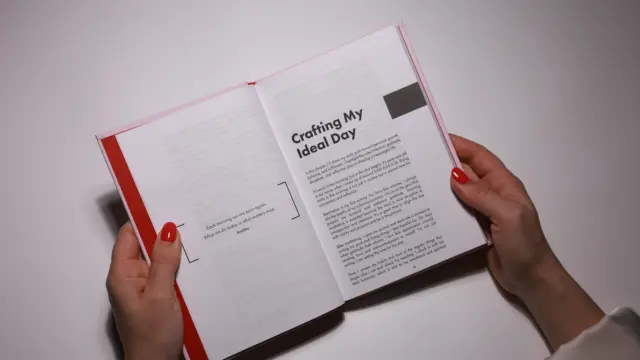
Word of the Year 2027: How to Choose Yours (+ 100 Word Ideas)
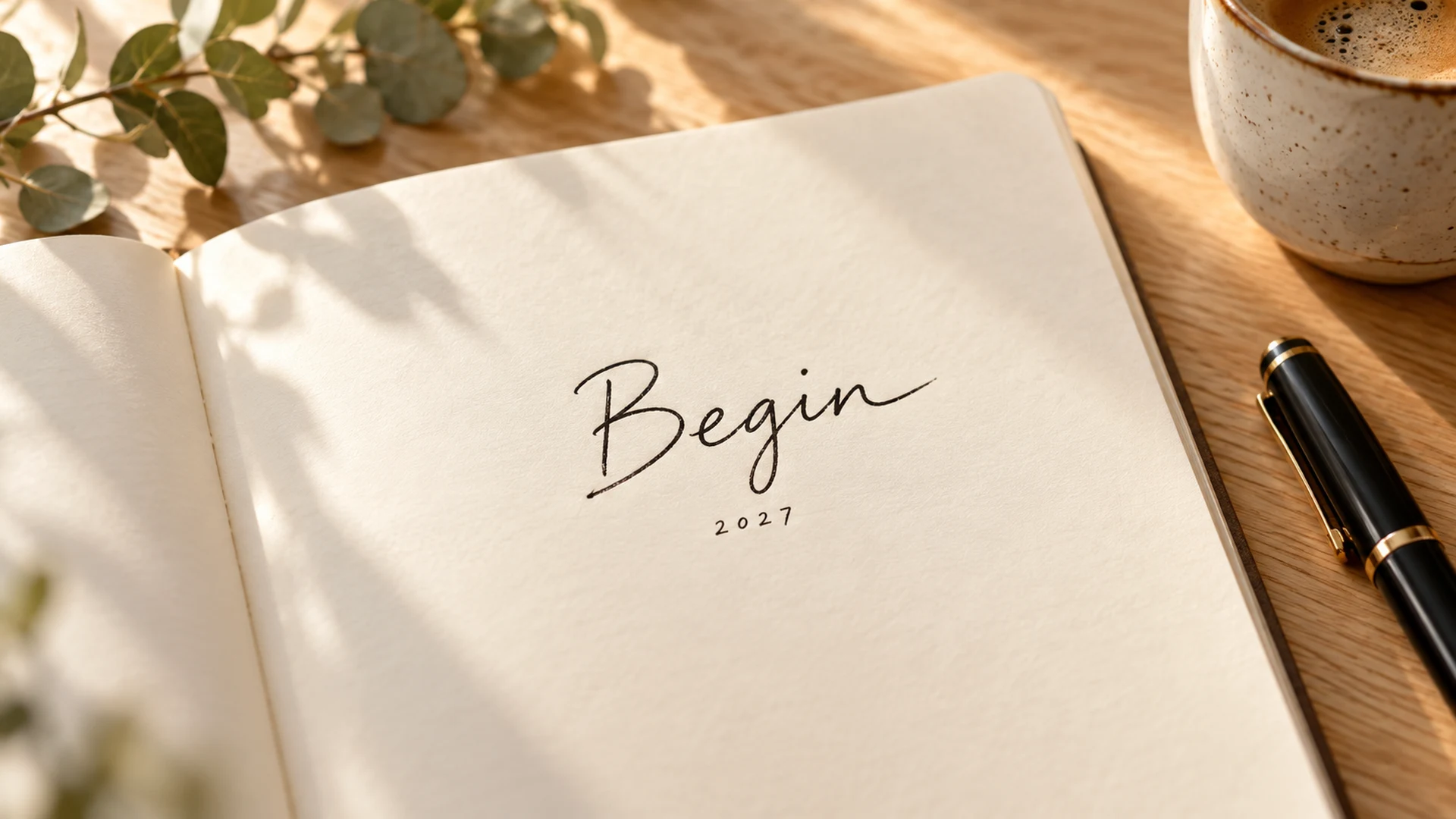
A word of the year is one word you choose to guide your decisions, habits, and attention for the next twelve months. Picking your word of the year 2027 takes about 30 minutes, and unlike a list of resolutions, one word is easy to remember on a hard Tuesday in March, when most goals have already been forgotten.
Below you will find a simple five-step process for choosing your word, 100 word ideas grouped by what you want more of, and a practical way to live your word every day so it does not fade by February. If you want the bigger picture on setting direction for the year, start with this goal setting guide, then come back and give that direction a single word.
What Is a Word of the Year (and Why It Works Better Than Resolutions)
A word of the year is a theme, not a target. Where a resolution says “lose ten pounds” or “read 24 books,” a word like Strength or Focus describes the kind of person you want to be while you chase those things. It works as a filter: when you face a choice, you ask which option fits your word.
Resolutions tend to break on the first missed day. You skip the gym once, the streak is gone, and the whole goal starts to feel like a failure. Strava has tracked this pattern for years and even named the second Friday of January “Quitter’s Day,” the point when many people abandon their New Year plans. A word survives a bad day because it asks for a direction, not a perfect record. You can miss a workout and still make the next choice with Strength in mind.
| New Year’s resolution | Word of the year | |
|---|---|---|
| What it is | A specific outcome | A guiding theme |
| Example | Run three times a week | Energy |
| After a missed day | Feels broken | Still applies tomorrow |
| How it guides you | Measures one behavior | Shapes many small choices |
| Best for | Clear, measurable targets | Direction and identity |
The two work well together. Your word sets the tone, and your goals give it something concrete to do. We will connect them in a later section.
How to Choose Your Word of the Year 2027 in 5 Steps
You do not need to wait for inspiration to strike. Set aside half an hour, open a notebook, and work through these steps in order.
1. Look back before you look ahead
Your best word usually comes from what the last year taught you. Write short answers to three questions: What drained me this year? What gave me energy? What did I keep wishing I had more of? If you want a fuller review, these year-end reflection prompts walk you through the whole year month by month.
2. Name the feeling you want next December
Picture yourself on December 31, 2027, looking back. Finish this sentence: “This was the year I felt more…” Write as many endings as come to mind. Calm, capable, connected, free. The feeling matters more than the achievement, because the feeling is what you will be chasing all year.
3. Brainstorm 10 to 15 candidate words
Turn your answers into single words. Do not judge them yet. Pull from the 100 ideas further down if you get stuck. Verbs like Build or Finish push you toward action, while nouns like Peace or Clarity describe a state you want to live in. Both work.
4. Test your shortlist against real life
Narrow the list to three, then put each word through these questions:
- Does it make a choice easier? Imagine a real decision you will face next month. Does the word point you in a direction?
- Does it feel a little uncomfortable? A good word stretches you. If it describes who you already are, it will not change much.
- Will you still like it in July? Trendy words wear thin. Pick one you could say out loud every day.
- Is it yours? Choose the word you need, even if it would never trend on social media.
5. Commit and write it down
Pick one. Write it at the top of a fresh page, then write one sentence explaining why you chose it. That sentence will matter in June, when you need to remember what the word was supposed to do for you.
Get more like this, every week
100 Word of the Year Ideas to Spark Your Choice
Scan these lists and notice which words make you pause. That small pull is usually the signal. The groups are organized by what you want more of in 2027.
Words for Calm and Peace
If last year felt rushed, loud, or heavy, choose a word that slows the pace. Calm, Peace, Still, Steady, Breathe, Rest, Slow, Ease, Quiet, Simplify, Release, Soften, Ground, Pause, Space, Enough, Light, Patience, Trust, Settle.
Words for Courage and Confidence
If you spent the year holding back, choose a word that asks you to step forward. Brave, Bold, Courage, Rise, Voice, Fearless, Begin, Try, Leap, Strong, Own, Worthy, Yes, Stand, Lead, Speak, Dare, Visible, Capable, Confident.
Words for Growth and Direction
If you have ideas but no follow-through, choose a word that turns intention into action. Grow, Focus, Build, Finish, Commit, Learn, Create, Becoming, Forward, Progress, Consistent, Intention, Purpose, Clarity, Discipline, Direction, Evolve, Expand, Practice, Momentum.
Words for Connection and Heart
If your relationships slipped to the bottom of the list, choose a word that brings people back to the center. Love, Kind, Connect, Present, Open, Listen, Give, Together, Grace, Forgive, Compassion, Heal, Home, Belong, Generous, Honest, Gratitude, Patient, Friendship, Family.
Words for Health, Energy, and Joy
If you have been running on empty, choose a word that puts energy and delight back into your days. Joy, Play, Energy, Vitality, Strength, Move, Nourish, Fresh, Bloom, Alive, Delight, Fun, Wonder, Adventure, Explore, Savor, Thrive, Radiant, Free, Whole.
If none of these fit, keep the feeling from step two and look for a synonym. The right word often sits one step away from the obvious one.
How to Live Your Word Every Day (So It Doesn’t Fade by February)
Choosing the word is the easy part. Most words of the year fail for the same reason resolutions do: they get written once in January and never looked at again. The fix is to give your word a small, daily job.
- Turn it into one daily action. Each morning, ask: “What is one thing I can do today that fits my word?” If your word is Rest, the answer might be leaving your phone in the kitchen at 9 p.m.
- Write an if-then plan. “If I feel the urge to say yes to something I do not want, then I will remember Boundaries and ask for a day to think.” Psychologists call these implementation intentions, and a meta-analysis by Peter Gollwitzer and Paschal Sheeran covering 94 studies found they have a medium-to-large effect on actually reaching goals.
- Make it an affirmation. Wrap the word in a present-tense sentence you can repeat: “I am steady, even when the day is not.” These I AM affirmations show how to phrase them so they sound believable.
- Keep it visible. Put the word on your lock screen, a sticky note on the mirror, or the first page of your journal.
- Check in on a schedule. Every week or two, write a few lines: Where did my word show up? Where did I forget it? What would it ask of me next week?
When I designed the iAmEvolving Journal, I built the daily goal section around repetition on purpose: you write one goal, and the next morning you write it again. A word of the year works on the same principle. Seeing it once in January does almost nothing. Writing it, or acting on it, every day is what slowly changes how you think and choose.
One word, practiced every day, will shape 2027 more than any list of resolutions.
Pairing Your Word With Your Goals for the Year
Your word is the theme. Your goals are the chapters. Once you have chosen the word, write your two or three biggest goals for 2027 underneath it and ask how the word should shape the way you pursue each one.
- Word: Finish. Goal: launch the side project. The word tells you to stop adding features and ship the first version.
- Word: Calm. Goal: get a promotion. The word tells you to prepare well instead of overworking out of fear.
- Word: Connect. Goal: get healthier. The word suggests finding a walking partner instead of training alone.
This pairing also keeps your goals honest. If a goal clashes with your word, that is useful information. A full life audit can help you see which areas of your life need the word most before you lock in your plans.
If you like ceremony, make the choice part of a small ritual on New Year’s Eve or the first morning of January. This new year intention setting ritual gives you a simple structure for writing your word, your goals, and a letter to your future self.
What to Do If Your Word Stops Fitting Mid-Year
Life changes. A word that felt right in January can feel wrong after a move, a loss, or a new job. Before you drop it, try reading it differently. Bold might shift from “take big risks” to “have the hard conversation.” Most words have more than one layer, and the second layer is often the one you needed.
If the word no longer serves you at all, it is fine to choose a new one for the second half of the year. Write down what the first word taught you before you let it go. That page will be one of the most useful things you read next December.
Choose Your Word of the Year in 30 Minutes
Review the Past Year
Name the Feeling You Want
Brainstorm Candidate Words
Test Your Shortlist
Write It Down With a Reason
Your Word Is a Daily Practice
A word of the year will not change 2027 on its own. What changes the year is the small choice you make on an ordinary Wednesday because the word reminded you who you decided to be. Choose it with care, keep it visible, and give it one small job every day.
The iAmEvolving Journal gives your word a place to live: a daily goal you write and repeat, a gratitude section, six habits to track, an inner harmony check-in, and a reflection page every ten days to see how your word is shaping the year.
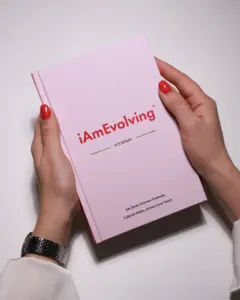
Start your daily practice of gratitude, goals, and growth.
Get the Journal →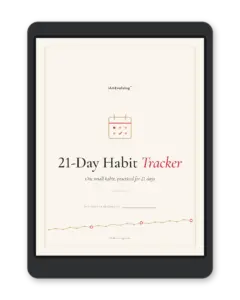
A free 21-day habit tracker PDF with daily check-ins, guided reflection prompts, and mindset reminders. Clean, minimal, and printable.
ExploreFrequently Asked Questions
What is a word of the year?
How do I choose my word of the year for 2027?
When should you choose your word of the year?
What are good examples of words of the year?
How do you remember your word of the year all year?