How to Stop Drinking Through Journaling and Heal

Many people want to stop drinking, but few understand why they drink in the first place. It’s not just about alcohol — it’s about what it replaces: comfort, silence, or escape. That’s why learning how to stop drinking through journaling is so powerful. Journaling gives you a way to face what you’ve been numbing, to see your emotions clearly, and to rebuild control from the inside out. Each page becomes a small act of healing and awareness — the beginning of a life where you no longer need to escape yourself.
That’s why willpower alone rarely works. To truly stop drinking, you have to learn to listen — to your body, your emotions, your triggers, and your needs. And that’s exactly what journaling teaches you to do.
Journaling is not about judgment or perfection. It’s about awareness. Each time you sit down with your pen, you meet yourself where you are — not where you wish you were. You give your emotions a voice. You make the unconscious visible. Over time, this process rewires your mind, your habits, and your relationship with yourself.
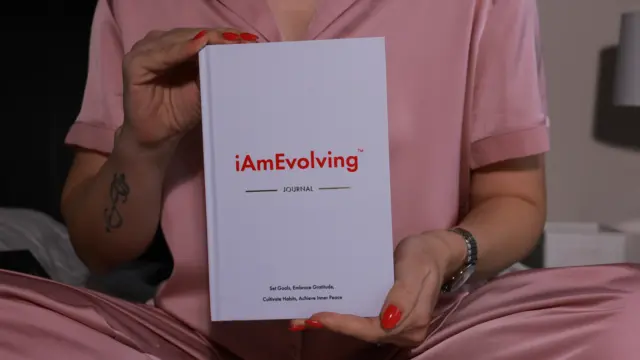
This is the quiet power of the iAmEvolving Journal. It’s not a book of pages — it’s a mirror for your inner world. And if you want to stop drinking and rebuild self-control, it can become your most powerful ally.
1. Why We Drink and How Journaling Helps You Stop Drinking
People rarely drink just for the taste. They drink because it gives temporary relief — a way to disconnect from stress, anxiety, boredom, or pain. But alcohol doesn’t erase emotions; it simply numbs them for a while. When the effect fades, those same emotions return, often stronger.
Journaling interrupts that cycle. It helps you pause long enough to see what’s really happening beneath the urge. Instead of reaching for a drink, you reach for a pen — and in that moment, you choose awareness over avoidance.
You don’t drink because you’re weak. You drink because you’re human — and you forgot there’s another way to soothe what hurts.
Ask yourself:
- What feeling am I trying not to feel when I drink?
- What do I believe alcohol gives me that I can’t give myself?
- What happens if I sit with the craving instead of reacting to it?
These are not easy questions, but they are powerful ones. They open the door to understanding — and once you understand, change becomes possible.
2. Setting a Goal That Becomes Your North Star
Every transformation begins with a clear intention. You cannot evolve without direction. In the iAmEvolving Journal, the first section — Setting Goals — gives you a space to define your North Star. This is not a vague wish like “I want to quit drinking.” It’s a declaration of who you are becoming.
Try writing something like this:
I am clear, calm, and in control of my choices.
I am free from the need to escape myself.
I honor my emotions without numbing them.
Write this goal in the present tense, every single day. Repetition is how the subconscious mind learns. When you repeat a new identity daily, your brain begins to believe it. The same mechanism that once reinforced drinking can now reinforce freedom.
If you’re not sure where to begin, explore How to Set Meaningful Goals and Actually Achieve Them. It will guide you in crafting a goal that feels personal, emotional, and achievable — not forced.
3. Why Repetition in Journaling Helps You Stop Drinking
Most people underestimate the power of repetition. The mind learns through patterns. Every time you reach for a drink, you strengthen a neural pathway that says, “This brings relief.” Every time you write your goal instead, you begin to weaken that link and build a new one: “Awareness brings peace.”
This is not instant. But journaling daily creates a rhythm of presence. Over time, your subconscious records this new pattern — one that leads to self-control instead of craving. That’s why your daily goal-writing ritual matters. It’s not about words on paper; it’s about reprogramming your mind to follow a different story.
Get more like this, every week
4. How Gratitude Journaling Helps You Stop Drinking
When people struggle with drinking, shame often becomes their silent companion. Gratitude dissolves that shame. It reminds you that progress matters more than perfection.
In your journal’s Gratitude section, don’t just list things that sound “positive.” Write what’s real. Some days, you might be grateful simply because you noticed your craving before acting on it. Other days, it might be the clarity of a sober morning or a peaceful night’s sleep.
Examples:
- “I’m grateful I paused and took a breath before reacting.”
- “I’m grateful I wrote instead of poured.”
- “I’m grateful for the clarity I feel today.”
Each line of gratitude shifts your focus from guilt to growth. It helps you build a new emotional baseline — one that rewards awareness instead of avoidance. For more ideas, visit How a Gratitude Journal Can Transform Your Mindset.
5. Build New Habits to Stay Sober Through Journaling
Habits are the structure beneath every lasting change. If drinking became part of your daily rhythm, you need to replace it — not just remove it. The key is to understand what the habit gave you: comfort, relaxation, social connection, or release. Then, recreate those needs consciously.
In the Habits section of the iAmEvolving Journal, write one new habit you’ll commit to. Start small. Maybe it’s a short walk after dinner instead of a drink. Maybe it’s five minutes of deep breathing before bed. Every checkmark builds self-trust, and self-trust is the foundation of sobriety.
Try the “Ritual Reset” framework:
- Keep the time. If you used to drink at 7PM, keep that hour sacred.
- Change the action. Replace the drink with journaling, a bath, or tea.
- Keep the reward. The calm you seek still comes — now through presence, not alcohol.
Explore more about creating consistency in The Power of Daily Habits: Build the Life You Want.
6. Understanding Emotional Triggers
Every craving is a messenger. Instead of fighting it, write to it. When you feel the urge to drink, open your journal and ask:
- “What emotion am I avoiding right now?”
- “What happened today that made me want to escape?”
- “What would I rather feel instead?”
Emotions are energy — they move when acknowledged. By writing about them, you release their hold. This is where the Inner Harmony section becomes your compass. It helps you notice patterns, measure your emotional balance, and gently bring yourself back to center.
As you develop awareness, you’ll realize that cravings are not commands — they’re signals. For a deeper reflection on transforming fear and discomfort, read From Fear to Faith: Transforming Negative Emotions.
7. The Power of Self-Reflection
Recovery is not a straight line. Some days you’ll feel strong; others you’ll feel pulled back. What matters is reflection, not perfection. Use your journal’s Self-Reflection pages to review your week:
- What patterns did I notice?
- When did I feel most balanced?
- What triggered me — and how did I respond differently?
- What small win am I most proud of?
By tracking these moments, you’ll start to see progress that would otherwise go unnoticed. The process builds resilience — and resilience is the quiet strength that keeps you evolving.
8. Why Journaling Reprograms the Mind to Stop Drinking
Writing activates the conscious and subconscious mind at once. When you write about your feelings, goals, or challenges, your brain processes them more deeply. The act of writing slows the mind and creates awareness — the same awareness that alcohol temporarily blocks.
Over time, this repetition forms new neural pathways. You begin to associate reflection with relief, not alcohol. That’s how journaling becomes more than a coping tool — it becomes a reprogramming method.
Every time you pick up your pen instead of a drink, you teach your mind a new way to find peace.
9. A Simple Daily Journaling Ritual for Sobriety
Here’s a 10-minute daily practice you can start tonight:
- Morning: Write your goal as if it’s already true — “I am free, focused, and in control.” Then list three things you’re grateful for.
- Evening: Reflect on one small victory and one moment of awareness. End with “I am proud that I…”
This rhythm rewires your habits, reinforces your identity, and builds the emotional muscle of awareness. You’re not trying to be perfect — you’re practicing presence. Each entry is one more brick in the foundation of your self-control.
10. Returning to Inner Peace
Stopping drinking is not the goal — living in peace is. When you journal consistently, you’ll begin to notice that the real transformation isn’t about alcohol at all. It’s about remembering who you are beneath the noise.
The iAmEvolving Journal was designed for this exact purpose — to help you reconnect with your clarity, gratitude, discipline, and inner harmony. It gives you a structure to evolve consciously, one page at a time.
When you choose journaling over drinking, you’re not depriving yourself — you’re returning to yourself.
Start your daily practice of gratitude, goals, and growth.
Get the Journal →A gentle 7-day reset to help you slow down, feel steadier, and reconnect — in just 5–10 minutes a day.
Start the ResetA simple introduction to daily journaling — gratitude, goals, and habits made easy.
Learn the MethodFor more mindful practices like this, explore our Journaling for Mental Health collection — where we share reflective guides and prompts to support emotional healing and awareness.
How does journaling help stop drinking?
What should I write about when I want to drink?
How long does it take to see results from journaling?
Do I have to use a specific journal?
What if I relapse or drink again?
Remember: You’re not just trying to stop drinking. You’re learning to live consciously, to feel again, and to evolve beyond the need to escape. Every page you write is proof — you’re already becoming who you were meant to be.