Journaling for Men: The No-Nonsense Guide to Getting Started
Most men were never taught to write about what they think or feel. There was no class for it, no halftime talk about it, and no one in your circle probably brought it up over coffee. But here is the truth: journaling is one of the most effective tools a man can use to sharpen his focus, lower stress, and make better decisions. A journal for men is not about pouring out emotions on a page. It is about building a private system for clarity, self-awareness, and forward momentum. Research consistently shows that expressive writing reduces cortisol levels, improves working memory, and supports emotional regulation. That is not soft. That is a competitive advantage.
Whether you are running a business, raising a family, managing pressure at work, or just trying to figure out what you actually want from the next chapter of your life, a simple writing practice can change how you process everything. This guide is built for men who want the facts, the steps, and zero fluff. If you have never picked up a journal before, or if you tried once and it felt pointless, you are in the right place. Consider this your journaling guide stripped down to what actually works.

Why More Men Are Starting a Journal for Men
There is a quiet shift happening. More men are recognizing that thinking in circles does not solve problems. Writing things down does. When you put thoughts on paper, you move them from the chaotic loop in your head to a place where you can actually examine them. You create distance between a reaction and a response. That is the real value of journaling.
Men tend to process stress internally. We push through. We keep going. But unexamined stress does not disappear. It shows up as short tempers, poor sleep, scattered focus, and decisions made on autopilot. A study published in the journal Psychosomatic Medicine found that men who engaged in regular expressive writing showed measurable reductions in blood pressure and improved immune function. Journaling is not about being vulnerable for the sake of it. It is about being honest with yourself so you can operate at your best.
Some of the most successful men in history were dedicated journal keepers. Marcus Aurelius, Benjamin Franklin, and Bruce Lee all used writing as a tool for self-mastery. They did not journal because it felt nice. They journaled because it gave them an edge.
What Journaling Actually Does for You
Before you start, it helps to know what you are getting into and why it works. Here are the practical benefits that matter most to men:
Clears Mental Clutter
Your brain was not designed to hold 47 open tabs of unfinished thoughts. When you write things down, you offload that mental weight. Research on how journaling rewires your brain shows that the act of writing activates the reticular activating system, which helps your mind prioritize what actually matters. You stop spinning and start sorting.
Reduces Stress Without Talking About It
Not every man wants to sit in a circle and share his feelings. That is fine. Journaling gives you a private outlet. You can process a bad day, a tough conversation, or a decision that keeps you up at night without needing anyone else involved. Studies confirm that journaling reduces stress by helping the brain move from the emotional center to the prefrontal cortex, where rational thinking happens.
Sharpens Focus and Decision-Making
Writing forces you to slow down and organize your thoughts. When you write about a decision you are facing, you naturally start weighing options, identifying blind spots, and clarifying priorities. Over time, this builds a habit of structured thinking that carries into meetings, conversations, and high-pressure moments.
Tracks Your Progress
A journal is a record. When you review past entries, you see how far you have come, what patterns keep showing up, and where you are actually growing versus where you are stuck. This kind of self-awareness is hard to get any other way.
How to Start Journaling in 5 Minutes
The biggest mistake men make with journaling is overthinking it. You do not need a leather-bound notebook, a fountain pen, or a quiet room at sunrise. You need five minutes and something to write with. That is it.
Here is a simple framework to get started today:
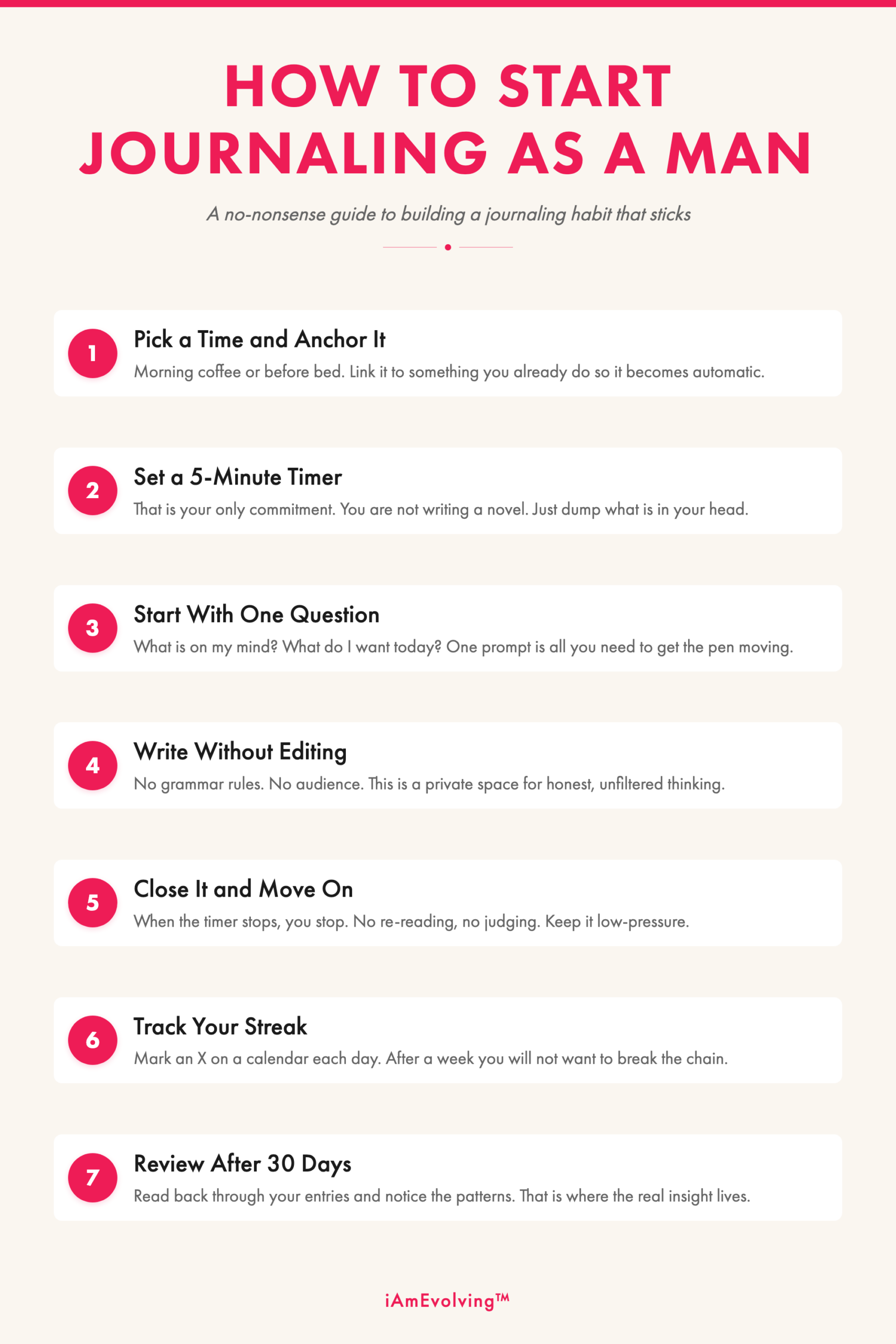
- Pick a time. Morning works well because your mind is fresh, but evening works too if you prefer to decompress. Attach it to a habit you already have, like drinking your first coffee.
- Set a timer for 5 minutes. That is your only commitment. You are not writing a novel. You are dumping what is in your head onto paper.
- Start with one question. If you do not know what to write, answer one of these: What is on my mind right now? What do I want to accomplish today? What went well yesterday?
- Write without editing. Do not worry about grammar, spelling, or sounding smart. This is for you and no one else.
- Close the journal and move on. You are done. Five minutes. No drama.
If you already have a morning journaling routine, you can fold this in naturally. If you are completely new, start small and build from there. Consistency matters more than volume. Five minutes a day for 30 days will change more than one long session every other week.
Get more like this, every week
What to Write About: Practical Prompts for Men
The blank page can feel like a wall. If you are not sure what to write, prompts give you a starting point. These are designed specifically for the way most men think: direct, goal-oriented, and focused on outcomes.
Daily Check-In Prompts
- What are the three most important things I need to get done today?
- What is the one thing I keep putting off, and why?
- How did I handle pressure yesterday? What would I do differently?
- What am I grateful for right now, even if it feels small?
Weekly Reflection Prompts
- What did I learn about myself this week?
- Where did I waste energy on things that do not matter?
- What relationships need my attention?
- Am I moving toward my goals or just staying busy?
Deep Dive Prompts
- What does success actually look like to me, not what I was told it should look like?
- What fear is holding me back right now, and is it based on reality?
- If I could change one habit starting tomorrow, which one would make the biggest difference?
- What would the man I want to become do differently today?
You do not need to use a prompt every time. Some days, you will sit down and the words will come. Other days, a prompt gives you the push to get started. Both approaches work.
Choosing the Right Journal
The journal you use matters less than the fact that you use one. That said, the right format can make the difference between building a lasting habit and abandoning it after a week.
There are three main types worth considering:
Blank Journals
Maximum freedom. No structure, no prompts, no rules. Best for men who already know what they want to write about and prefer stream-of-consciousness processing. The downside is that the blank page can be intimidating for beginners.
Guided Journals
These come with built-in prompts, sections, and structure. They reduce the friction of getting started because the thinking is done for you. You just fill in the blanks. This is the best option for men who are new to journaling and want a system rather than a blank slate.
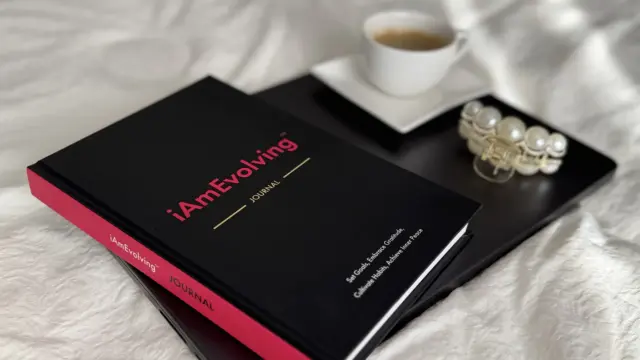
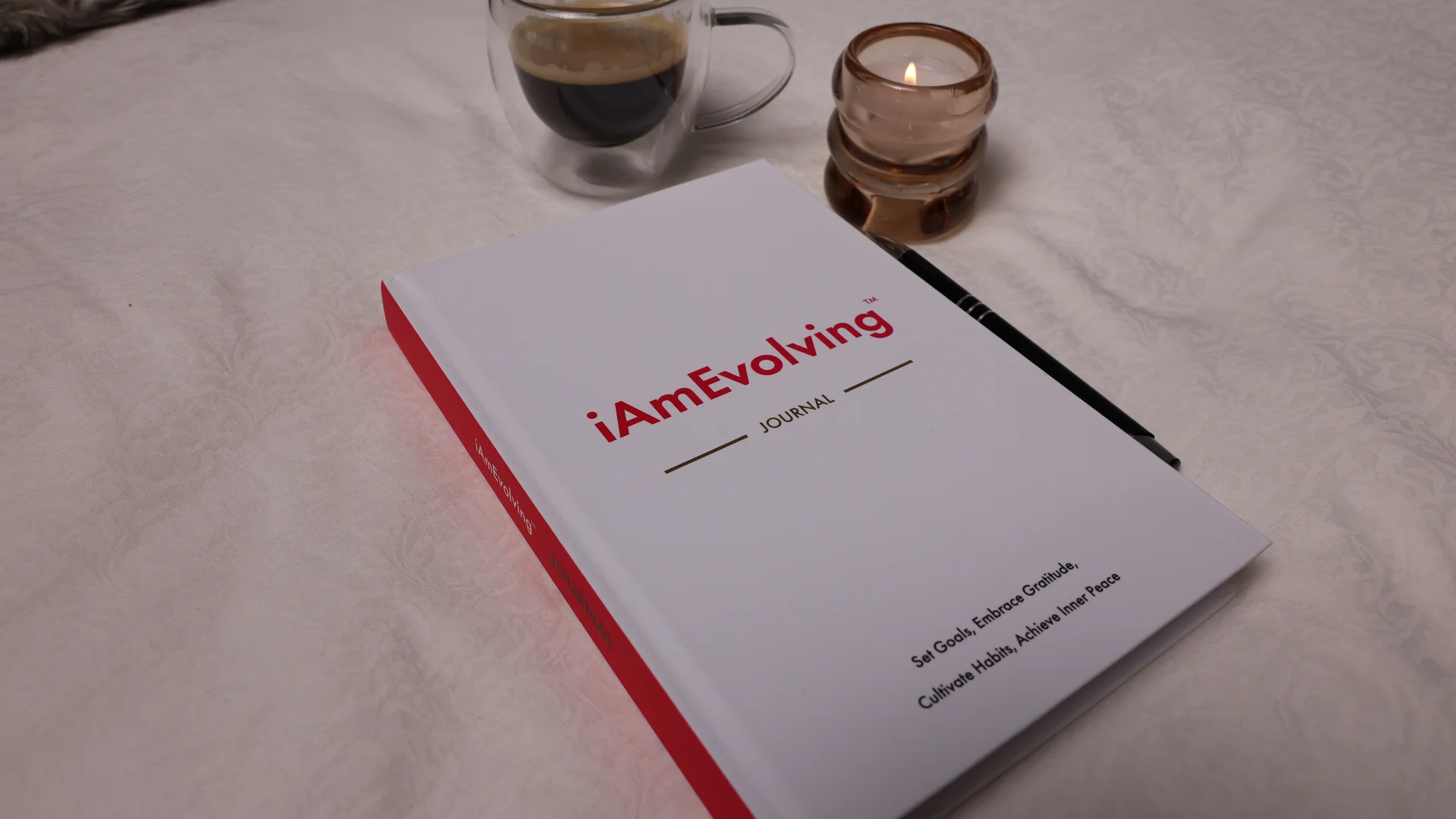
The iAmEvolving Journal is designed with this approach in mind. It includes daily gratitude prompts, goal-setting pages, habit tracking, and reflection sections all in one guided format. Instead of staring at an empty page, you work through targeted questions that keep your writing focused and purposeful. It is built for people who want results from their journaling, not just a place to vent.
Digital Journals
Apps like Day One or Notion work for men who are always on their phone or laptop. The advantage is convenience and searchability. The disadvantage is that screens bring distractions, and research suggests handwriting has stronger cognitive benefits for memory and emotional processing. If you go digital, keep the app simple and distraction-free.
If you want a deeper comparison of what is available, check out the best journals for beginners roundup for a breakdown of the top options on the market right now.
Building the Habit: How to Make Journaling Stick
Starting is easy. Continuing is where most men fall off. Here is what actually works for building a journaling habit that lasts:
Anchor it to an existing routine. Do not try to create a brand new slot in your day. Attach journaling to something you already do. After your morning coffee. Before you check email. Right before bed. When it is linked to an existing cue, it sticks faster.
Lower the bar. Your goal is not to write a page. Your goal is to open the journal. Some days you will write two sentences. Other days you will fill three pages. Both count. The only failed session is the one that does not happen.
Remove friction. Keep your journal where you will see it. Nightstand. Desk. Next to the coffee maker. If you have to go find it, you are less likely to use it.
Do not read old entries right away. For the first 30 days, just write. Do not go back and judge what you wrote last week. That kills momentum. Save the review for later, once the habit is solid.
Track your streak. Mark an X on a calendar every day you journal. After a week, you will not want to break the chain. This simple visual cue is surprisingly powerful for maintaining consistency.
How to Start a Journaling Practice as a Man
Choose Your Time and Place
Grab a Journal That Fits Your Style
Set a 5-Minute Timer and Start Writing
Close It and Move On
Track Your Streak and Review Weekly
Conclusion
Journaling is not complicated, and it is not reserved for a certain kind of person. It is a practical tool that helps you think more clearly, handle stress better, and stay aligned with what matters most to you. You do not need to write pages. You do not need to be eloquent. You just need to show up, put pen to paper, and be honest with yourself for a few minutes each day.
If you are ready to take this seriously, start with five minutes tomorrow morning. Write down what is on your mind. Then do it again the next day. Within a few weeks, you will notice something shift — less mental noise, more clarity, and a stronger sense of direction. The men who build this habit rarely go back.
If you want a journal that is built for this kind of focused, results-driven practice, explore the best personal development journals and find one that matches how you think. The right tool makes the habit easier to keep.
Start your daily practice of gratitude, goals, and growth.
Get the Journal →A gentle 7-day reset to help you slow down, feel steadier, and reconnect — in just 5–10 minutes a day.
Start the ResetA simple introduction to daily journaling — gratitude, goals, and habits made easy.
Learn the MethodFAQ: Journaling for Men
Is journaling good for men?
What should a man write in his journal?
How long should men journal each day?
What is the best journal for men who are just starting out?
Can journaling help with anger and frustration?