The Science Behind Journaling: What Research Says About Writing by Hand
Journaling is one of the most well-studied personal growth practices in behavioral science. Over three decades of peer-reviewed research — spanning neuroscience, psychology, and immunology — confirm that the simple act of writing by hand changes how the brain processes stress, stores memories, and regulates emotion. These are not vague wellness claims. They are findings replicated across hundreds of studies involving thousands of participants, and they explain why a daily writing practice remains one of the most accessible tools for mental and physical well-being.
What makes the research particularly compelling is that the benefits show up quickly and require very little time. Four days of writing for twenty minutes. A five-minute worry list before bed. A single page of gratitude each morning. The evidence points in the same direction every time: when you write about what you think and feel, your brain responds in measurable ways. If you are new to the practice, our journaling guide covers the fundamentals. Here, we look at what the science actually says — and why it matters for your daily life.
The Neuroscience of Handwriting: Why Pen and Paper Still Wins
In an age of keyboards and touchscreens, writing by hand might seem like a nostalgic choice. But neuroscience tells a different story. A landmark 2014 study by Pam Mueller and Daniel Oppenheimer, published in Psychological Science, found that students who took notes by hand performed significantly better on conceptual questions than those who typed. The difference was not about speed — it was about processing. Handwriting forces the brain to summarize, paraphrase, and encode meaning in real time, because the hand simply cannot keep up with verbatim transcription.
More recent research using EEG and fMRI imaging has reinforced this finding. A 2020 study led by Audrey van der Meer and Ruud van der Weel at the Norwegian University of Science and Technology showed that handwriting activates broad neural networks across the motor cortex, the parietal lobe, and the frontal regions associated with language and memory. Typing, by contrast, activated far fewer brain areas. The physical act of forming letters — the curves, the pressure, the spatial arrangement on the page — engages the brain at a deeper level than pressing uniform keys.
This matters for journaling because the depth of processing directly affects how well we learn from our own experiences. When you write by hand about a challenge, a goal, or an emotion, you are not simply recording information. You are forcing your brain to slow down, translate thought into language, and physically construct each word. That slower, more deliberate process is exactly what produces insight. It is why so many people report that they “think better” with a pen in hand — because, neurologically, they do.
Pennebaker’s Expressive Writing: The Study That Started It All
If there is a single name most associated with journaling research, it is James Pennebaker. In 1986, Pennebaker, a social psychologist at the University of Texas at Austin, published a study that would reshape how science understands the connection between writing and health. The protocol was simple: participants were asked to write about their deepest thoughts and feelings regarding a stressful or traumatic experience for fifteen to twenty minutes a day, over four consecutive days. A control group wrote about superficial topics like their daily schedule.
The results were striking. Participants in the expressive writing group made fewer visits to the doctor in the months following the study. They reported improved mood and lower levels of distress. Over the next three decades, more than 200 replications of this protocol confirmed the pattern across different populations — college students, prisoners, arthritis patients, breast cancer survivors, laid-off engineers, and many others. The effect was consistent: writing about difficult experiences for a short period of time produced measurable improvements in both psychological and physical health.
Pennebaker’s explanation centers on cognitive processing. When people suppress difficult emotions, the mental effort of inhibition creates chronic low-grade stress that wears down the body over time. Writing breaks that cycle by translating fragmented emotional memories into a coherent narrative. The act of putting an experience into words forces the brain to organize it — to find cause and effect, to assign meaning, to create a story with a beginning, middle, and end. Once the experience has been processed this way, the brain can file it and stop cycling through it. Understanding how journaling rewires your brain through this kind of narrative processing helps explain why the practice is so effective.
Journaling and Stress Reduction: What Happens to Cortisol
Stress is not just a feeling — it is a physiological event. When the brain perceives a threat, the hypothalamic-pituitary-adrenal (HPA) axis activates and releases cortisol, the primary stress hormone. Chronically elevated cortisol impairs memory, disrupts sleep, weakens the immune system, and increases the risk of cardiovascular disease. The question researchers have asked is whether journaling can intervene in that biological cascade — and the answer, repeatedly, is yes.
A 2013 study published in Psychoneuroendocrinology found that participants who engaged in expressive writing showed reduced cortisol output compared to control groups. A separate study by Smyth and colleagues, published in the Journal of the American Medical Association, found that asthma and rheumatoid arthritis patients who wrote about stressful events showed clinically relevant improvements in lung function and disease activity — outcomes that are directly mediated by stress hormones and inflammation.
The mechanism appears to involve the autonomic nervous system. Writing about stressful experiences activates the prefrontal cortex, the part of the brain responsible for executive function and rational analysis. This top-down activation helps regulate the amygdala — the brain’s threat-detection center — and shifts the body from sympathetic (“fight or flight”) to parasympathetic (“rest and digest”) dominance. In plain terms, journaling helps your nervous system calm down. If you are looking for practical ways to apply this, our post on how journaling reduces stress offers several approaches you can start today.
Affect Labeling: Why Naming Emotions Changes Them
One of the most elegant findings in the journaling literature comes from affect labeling research at UCLA. Psychologist Matthew Lieberman and his colleagues used fMRI imaging to demonstrate that simply putting feelings into words — labeling an emotion — reduces activity in the amygdala and increases activity in the right ventrolateral prefrontal cortex. In other words, when you write “I feel anxious,” the very act of naming the anxiety diminishes its neurological grip.
This finding, published in the journal Psychological Science in 2007, has profound implications for journaling. Every time you sit down and describe how you feel, you are performing affect labeling. You are recruiting the language centers of the brain to regulate the emotional centers. The research shows that this is not a conscious coping strategy — it operates at a neural level, automatically dampening the intensity of negative feelings. Participants in Lieberman’s studies did not even need to intend to feel better. The act of labeling did the regulatory work on its own.
This is one reason journaling is so effective for emotional regulation, even when the writing feels messy or unstructured. You do not need to solve the problem. You do not need to reach a conclusion. You only need to name what is there. The brain does the rest. For those dealing with difficult emotions, journaling for emotional clarity builds on this principle and offers prompts to help you identify what you are feeling when it seems hard to pin down.
Journaling and Sleep: Writing Your Way to a Better Night
If you have ever stared at the ceiling at night while your mind ran through tomorrow’s to-do list, there is a study for you. In 2018, researchers at Baylor University published a study in the Journal of Experimental Psychology that tested whether writing before bed could reduce the time it takes to fall asleep. Participants were divided into two groups: one wrote a to-do list for the next few days, and the other wrote about tasks they had already completed. Both groups went to bed immediately after writing.
The results were clear. Participants who wrote about upcoming tasks fell asleep significantly faster — an average of nine minutes faster — than those who wrote about completed activities. The more specific the to-do list, the faster they fell asleep. The researchers proposed that the act of writing “offloads” cognitive tasks from working memory, reducing the mental churn that keeps people awake. The brain, in effect, treats a written plan as a completed mental action and stops rehearsing it.
This complements earlier research on worry journaling. A 2012 study in Behaviour Research and Therapy asked participants to write about their worries and schedule a time to think about them later. Compared to a control group, the worry-journaling group reported fewer intrusive thoughts and reduced sleep disturbance. Whether you write about tasks, worries, or gratitude, the evidence consistently shows that a few minutes of journaling before bed helps the brain transition from active problem-solving to rest. Those who struggle with racing thoughts at night can benefit from journaling for anxiety as a structured way to process those thoughts before they reach the pillow.
Journaling and Immune Function: The Body Responds Too
Perhaps the most surprising line of journaling research involves the immune system. In 1999, Pennebaker and colleague Janice Kiecolt-Glaser published a study showing that expressive writing about traumatic events improved wound healing in healthy older adults. Participants who wrote about their deepest feelings for twenty minutes over three days showed faster wound healing compared to a control group — and the effect was mediated by immune function markers.
Additional studies have explored the link between writing and specific immune markers. Research published in Psychosomatic Medicine found that expressive writing increased T-cell (CD4+) lymphocyte counts in HIV patients. A study of hepatitis B vaccination recipients found that those who wrote about traumatic experiences developed higher antibody levels in response to the vaccine. While the effect sizes are modest, the consistency of the finding across different health conditions is notable: writing about emotional experiences appears to strengthen the body’s immune response.
The likely pathway runs through the stress-immune connection. Chronic stress suppresses immune function via elevated cortisol and pro-inflammatory cytokines. When journaling reduces the physiological stress burden — as the cortisol studies described earlier suggest — the immune system has more resources available for defense and repair. It is a reminder that the separation between “mind” and “body” is largely artificial. What happens on the page affects what happens in the body.
Journaling and Goal Achievement: The Dominican University Study
Goal-setting research has long emphasized the importance of clarity and commitment. But a widely cited study by Gail Matthews at Dominican University of California added a crucial variable: writing. Matthews divided 267 participants into five groups with varying levels of goal-setting structure. The group that wrote down their goals, created action commitments, and shared weekly progress reports with a friend achieved 42 percent more of their goals than the group that simply thought about them.
The act of writing made the difference. Participants who only thought about their goals and those who wrote them down started with the same level of motivation. But the writers achieved substantially more. The reason, Matthews proposed, aligns with what neuroscience tells us about encoding: writing activates different brain regions than thinking, creates a stronger memory trace, and increases accountability through external representation. A goal written on paper is no longer just an idea — it becomes a commitment that exists outside the mind.
This finding has been corroborated by broader research on implementation intentions, developed by psychologist Peter Gollwitzer. Writing specific “if-then” plans — “If it is 7 a.m., then I will journal for ten minutes” — dramatically increases follow-through compared to holding a general intention. The combination of written goals and implementation intentions is one of the most reliable behavior-change strategies in the psychological literature. If you are starting from scratch, how to start journaling for beginners breaks the process into manageable steps that build toward this kind of intentional practice.
Why Consistency Matters More Than Length
One pattern that emerges across all of these studies is that frequency and consistency matter more than the length of any single session. Pennebaker’s original protocol required only fifteen to twenty minutes over four days. The Baylor sleep study used a five-minute writing window. The Dominican University study tracked goals over four weeks. The benefits of journaling do not require long, elaborate sessions. They require showing up regularly and writing honestly.
Research on habit formation supports this. A 2009 study by Phillippa Lally and colleagues at University College London found that new habits take an average of sixty-six days to become automatic, with a wide range depending on the behavior. The key predictor was not perfection but repetition. Missing a single day did not meaningfully derail habit formation, but extended breaks did. For journaling, this means that writing for five minutes a day, six days a week, will produce more benefit than writing for an hour once a month.
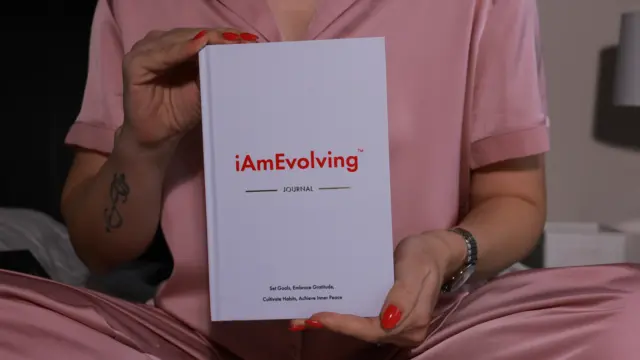
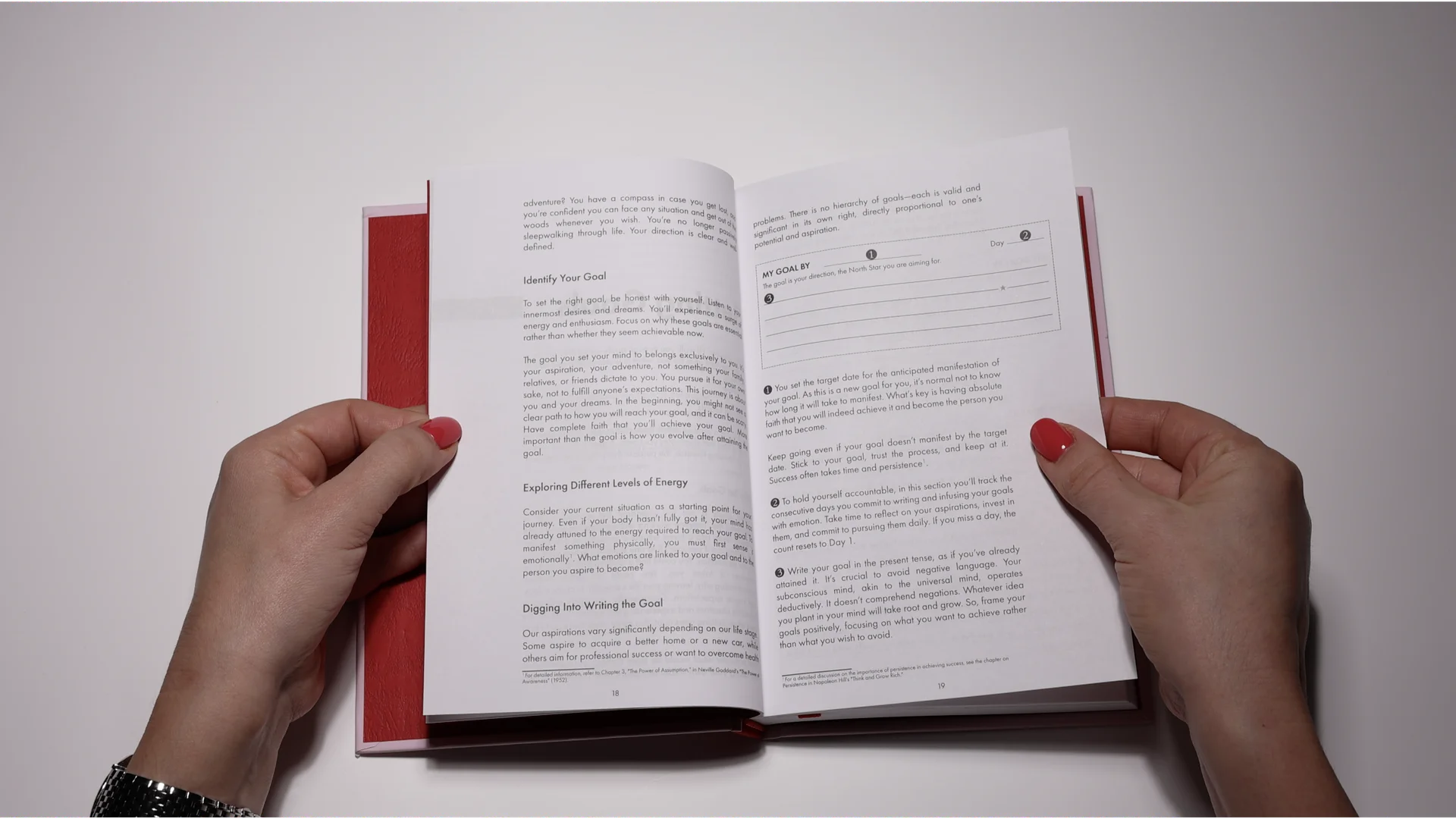
This is one reason structured journals work better for most people than blank notebooks. When you open a blank page, the question “What should I write about?” can become a barrier. A structured journal removes that friction by providing prompts, sections, and a clear daily framework. The iAmEvolving Journal was built around this insight — it applies the research on gratitude, goal-setting, and self-reflection into a daily format that takes about ten minutes to complete. The structure is the strategy. It turns the science into practice without requiring you to design your own protocol. For those building morning habits that support long-term growth, journaling fits naturally into that routine.
Conclusion
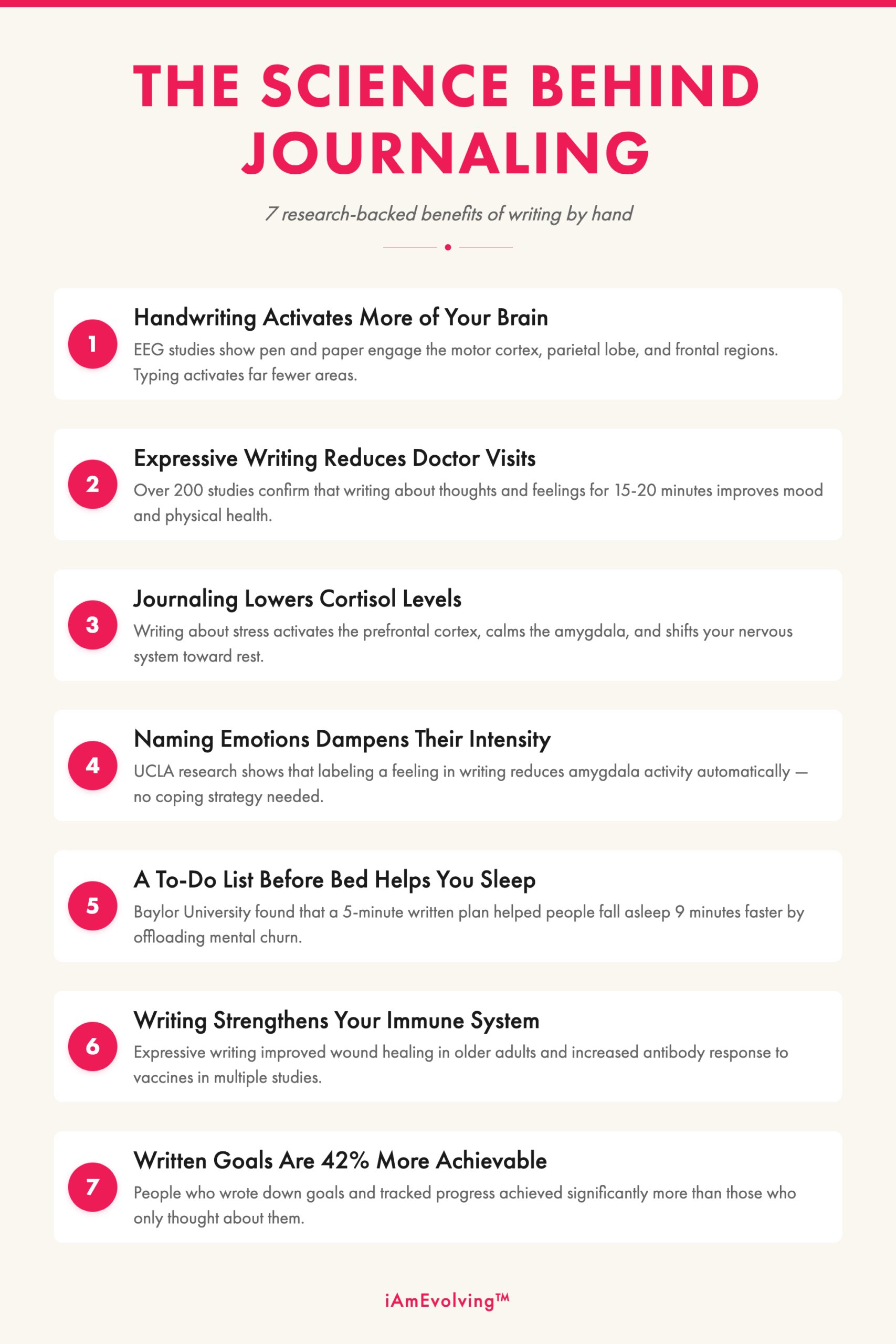
The science behind journaling is not speculative. It is backed by decades of controlled studies across multiple disciplines — neuroscience, psychology, immunology, and behavioral science. Handwriting engages the brain more deeply than typing. Expressive writing reduces doctor visits and improves mood. Naming your emotions on paper dampens the neural intensity of distress. Writing before bed helps you fall asleep faster. Putting your goals in writing makes you measurably more likely to achieve them. These are not theories — they are findings that have been replicated hundreds of times around the world.
The common thread across every study is the same: writing by hand forces the brain to slow down, organize, and make meaning out of raw experience. That process — sometimes called cognitive restructuring, sometimes called narrative processing — is what drives the benefits. It does not require special training. It does not require talent. It requires a few minutes, a pen, and the willingness to be honest about what you think and feel.
If you have been thinking about starting a journaling practice, the research gives you every reason to begin. The iAmEvolving Journal brings together the evidence-backed elements — gratitude, goal-setting, self-reflection, and daily consistency — into a single guided format. You do not need to study the literature. You just need to open the page and write. The science is already built in.
Start your daily practice of gratitude, goals, and growth.
Get the Journal →A gentle 7-day reset to help you slow down, feel steadier, and reconnect — in just 5–10 minutes a day.
Start the ResetA simple introduction to daily journaling — gratitude, goals, and habits made easy.
Learn the MethodFAQ: The Science Behind Journaling
Is there scientific evidence that journaling improves mental health?
Is handwriting better than typing for journaling?
How long do you need to journal each day to see benefits?
Can journaling help you fall asleep faster?
Does writing down goals actually make you more likely to achieve them?