Journaling After Job Loss: Rebuilding Your Confidence on Paper

Journaling after losing a job is one of the steadiest practices you can lean on when the floor has just dropped out from underneath you. The phone call, the meeting, the email that started with “as part of a restructuring”: whichever way it arrived, the silence that follows is the same. You close the laptop and the whole shape of your day disappears. Writing for ten minutes a day will not give you a job back, but it will give you something almost as urgent: a place to put the fear, the shame, and the questions, so they stop circling inside your chest at three in the morning.
This post is for anyone in the first ninety days of an involuntary job loss. Laid off, fired, made redundant, let go in a restructure: the labels differ, the body knows it is the same wound. All you need is a cheap notebook, a pen, and ten minutes a day you can protect. Being a writer has nothing to do with it. What follows is the practice I’d hand to a friend the morning after: how to write through the shock, how to handle the conversations with the people you love, and how to slowly, page by page, rebuild a professional confidence that the layoff tried to take from you.
The First Morning: Why Journaling After Losing a Job Helps Before Anything Else Does
The first morning with no job to go to is its own kind of strange. You wake up at the time the alarm used to ring. The coffee tastes the same. The street outside sounds the same. But the day has no scaffolding, and the absence of that scaffolding is louder than anything a person can tell you. Journaling after losing a job works because it gives that empty morning a small, contained shape: open the page, set a timer for ten minutes, write whatever is true. You are not solving anything. You are putting your weight down somewhere.
Expressive writing research has tracked job seekers through unemployment for decades. Studies out of the University of Texas found that people who wrote for twenty minutes a day about the experience of being laid off were re-employed at significantly higher rates within eight months than those who did not write at all. The mechanism is plain enough: writing lowers cortisol, slows rumination, and frees up enough cognitive bandwidth to do the harder work of applying, networking, and interviewing without spiralling. Healing through writing is a measurable shift here, more than a metaphor.
You do not need to journal beautifully. The first entries will be raw and repetitive. You will write “I can’t believe this is happening” four mornings in a row. That is the practice doing exactly what it is supposed to do. The page is taking the weight your nervous system has been carrying alone.
Naming the Shock: Identity, Money, and the Strange New Calendar
Involuntary job loss hits three places at once, and most people only have language for one of them. The money fear is the loudest. Rent, groceries, the line in the savings account that suddenly looks shorter than it did last week. Underneath the money fear, though, is the identity loss: for years you have answered “what do you do” with a sentence that no longer applies, and you do not yet have a sentence to replace it. And underneath that is the calendar grief, the small, almost embarrassing sadness of losing the Tuesday standup, the Friday lunch order, the rhythm of a week that used to belong to someone.
Journaling lets you name all three without ranking them. You do not have to decide which fear is “allowed.” Write the money fear in concrete numbers. Write the identity loss in the exact words you cannot say out loud. Write the calendar grief without apologizing for caring about something as small as a standing meeting. Journaling for emotional clarity works precisely because it refuses to flatten complicated feelings into a single, tidy headline.
Try one of these openings the first week:
- Right now, the part of me that is most scared is…
- The thing I miss most about the old week is…
- What I keep replaying from the day they told me is…
- The number I am most afraid to look at is…
- If no one would judge me, I would admit that…
Write until the timer ends and close the book. You do not need to reread. The point of these first entries is to take the pressure out of your chest and put it somewhere the page can hold.
The Hard Conversations: Telling Your Partner, Family, and Friends
The conversations are often harder than the layoff itself. Telling a partner who counts on the income. Telling parents who will worry. Telling friends whose reactions land somewhere between sympathy and discomfort, because they are quietly afraid it could happen to them too. A journal earns its keep here. Before you have any of these conversations, write the version you cannot say out loud. The angry version, the embarrassed version, the version that is sure you saw it coming and did nothing.
Putting the unfiltered version on paper first does two things. It drains the charge out of the message, so when you do speak you are not sobbing or defensive. And it surfaces what you actually need from the conversation, which is rarely advice. Most people in the first month of a job loss need to be heard, not fixed. Knowing that in advance lets you say it: “I’m not asking you to solve this. I just need you to listen for ten minutes.” That sentence alone saves whole relationships.
If shame is showing up, and it will, because our culture equates employment with worth, write to that shame directly. Where did you learn that being out of work meant you were less? Whose voice is loudest in your head right now? Naming the source of the shame on paper is the first step in refusing to carry it as if it were yours. The work of reframing the thoughts that arrive uninvited begins by writing them down honestly enough to see them.
Get more like this, every week
Seven Prompts for the First Sixty Days
The prompts below are for processing, and career planning can come later. The goal of the first sixty days is to metabolize what just happened so that when the next chapter does come into focus, you are choosing it from a steady place rather than grabbing the first thing that promises to make the panic stop. Pick one a day, in any order. Sit with it for ten minutes.
- Write the day it happened. Walk yourself through it slowly, from the morning you woke up to the moment you closed the door behind you. Notice what your body remembers that your head forgot.
- What did this job give me that was good? List the colleagues, the skills, the small wins. Grief is harder when you pretend nothing was lost.
- What did this job take from me that I am quietly relieved to be free of? The commute, the meeting, the boss, the constant low-grade anxiety. Permission to feel relief alongside loss.
- Who am I, separate from what I do for money? List ten things that are true about you and have nothing to do with your job title. Read the list back slowly.
- What story am I telling myself about why this happened? Write the harshest version first. Then write a version a kind friend would tell about the same events.
- What does a good day look like right now, with no job in it? Not someday. Today. A walk, a meal, an honest conversation, a small task completed.
- What am I afraid people are thinking about me? Write the fear in full. Then ask whether any of those people have actually said any of it to your face.
These prompts are designed to move what is stuck, even if they don’t make you feel better right away. Some entries will leave you lighter. Some will leave you tired and a little raw. Both are signs the practice is working.
Rebuilding Professional Confidence on Paper
Somewhere around week four or five, if you have been writing consistently, the entries start to change shape. The fear is still there, but it shares the page with curiosity. You begin to notice old projects you were proud of, problems you solved, moments your work mattered to a real person. This is the slow, undramatic part of the rebuild. Professional confidence after a layoff almost never returns in a single revelation. It returns in small entries that say “I did good work” until you start to believe it again.
One practice helps more than any other here. Once a week, open a fresh page and write what I call a competence inventory. Think of it as a handwritten record of one specific moment you were good at your job, rather than a resume. The client you talked off a ledge. The bug you tracked down at midnight. The presentation you delivered when you were running on three hours of sleep. Write it as a story, with the details. Over six weeks, you accumulate a stack of evidence that the layoff did not erase. Rebuilding confidence after a setback works exactly like this, through repetition of small, true entries until the body believes them again.
Pair the competence inventory with a separate page where you track tiny wins from the current week. A walk taken. A difficult email sent. A nap that was actually rest, not avoidance. The brain in the middle of a job loss is biased toward the negative. The journal is one of the few tools that can systematically tilt that bias back toward fair.
If self-doubt is the loudest voice on the page, give it its own dedicated entry once a week. Let it say everything it wants to say. Then write a single line underneath: “I hear you, and I am still going to try.” The work of turning self-doubt into self-belief usually looks like learning to act kindly in spite of the doubt, rather than silencing it.
The Long View: What This Season Tends to Clarify, Eventually
I have sat with enough people through the first ninety days of an involuntary job loss to be careful here. The cliche that a layoff is “a blessing in disguise” is something only someone with a paid salary should ever say to someone without one. It is rarely felt as a blessing in the moment, and it does not need to be. The honest version is quieter: most people who write through a job loss say, six or twelve months later, that the season clarified something about how they want to work and live that the old job had been hiding from them.
That clarity tends to arrive unannounced, in a journal entry one morning that reads, “I do not want to go back to that pace.” Or, “I want my next role to involve people, not screens.” Or, “I am ready to try the thing I have been afraid to try since I was twenty-six.” None of these are conclusions you can force in week two. They emerge from the consistent practice of writing honestly for long enough that your own voice becomes louder than the noise.
If you want a wider container for that practice, the iAmEvolving Journal is built around the same daily rhythm: one goal, one gratitude, one habit, one check-in, paired with a weekly review. The job search is still yours to do. The journal helps you stay legible to yourself while you do it. For more reflective practice once the dust starts settling, these self-discovery prompts work well as a companion to the structure above. And for the foundational practice underneath all of it, the broader guide to building a journaling habit is a good place to start when you have the bandwidth for it.
Conclusion: One Page at a Time
You did not choose this. That fact deserves to be said out loud, in your own voice, in your own handwriting, as many times as you need. Journaling after losing a job can’t undo what was done to you, though slowly it does something almost as valuable. It will keep you in conversation with the part of you that was good at your work, that has worth outside of any title, and that still gets to decide what comes next. Ten minutes a day. A cheap notebook. The willingness to show up for the page even on the mornings when you would rather not.
You are not behind. You are not broken. You are between chapters, and the page is one of the few places it is safe to be exactly that.
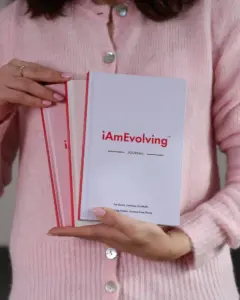
Start your daily practice of gratitude, goals, and growth.
Get the Journal →
A free 30-day gratitude journal designed for a simple daily practice. Calm, minimal, and printable to help you slow down and reflect.
ExploreFrequently Asked Questions
How soon after losing a job should I start journaling?
What should I write about in the first week after a layoff?
How does journaling help with the shame that comes after being fired or laid off?
Should I journal about my old boss or the people who let me go?
How long does it take to feel professionally confident again after a layoff?